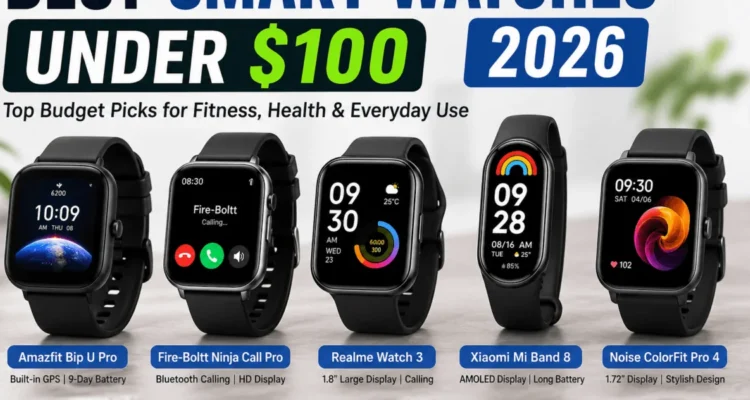
Best Smart Watches Under $100: 9 Smart Buying Checks

best smart watches under $100

The best smart watches under $100 can handle notifications, activity tracking, alarms, music controls, basic health trends, and everyday convenience without premium pricing. The challenge is separating useful features from impressive-looking claims. Budget wearables vary widely in sensor consistency, phone compatibility, battery life, app quality, comfort, privacy, and software support. This evergreen guide explains how to compare affordable smartwatches by real needs rather than model-year hype.

What Should You Expect From a Smartwatch Under $100?

The best smart watches under $100 should include a capable smartwatch under $100 that should show notifications clearly, track daily movement, record selected workouts, provide useful alarms and timers, maintain a stable phone connection, and last long enough between charges for your routine. Many models also offer heart-rate trends, sleep estimates, blood-oxygen estimates, GPS through a connected phone, weather, call alerts, and basic voice-assistant controls.

Expect compromises. Budget devices may use less refined materials, smaller app ecosystems, simpler vibration motors, limited reply options, inconsistent sensors, shorter software support, or reduced third-party integration. These limitations are acceptable when they do not interfere with your main use case. The right purchase is not the watch with the longest feature list; it is the one that performs the few functions you value reliably.

Use our main tech buying guide to compare compatibility, support, privacy, ownership cost, and seller protection across gadgets. This child guide applies those principles specifically to budget wearables and explains which specifications deserve attention.

Quick Answer: How Do You Choose the Best Budget Smartwatch?

Choose a budget smart watch by confirming phone compatibility first, then comparing screen readability, comfort, real battery life, notification behavior, app quality, sensor limitations, water-resistance conditions, privacy controls, warranty, and update history. Define three essential features before shopping. Test fit and notifications during the return period, and treat wellness data as general guidance rather than medical diagnosis.

  • Confirm Android or iPhone compatibility and required OS version.
  • Check which features work on your phone, not only on the manufacturer’s preferred platform.
  • Prioritize readable notifications, comfort, and dependable battery life.
  • Review the companion app before purchase.
  • Understand what each health sensor can and cannot measure.
  • Verify water-resistance limits and warranty exclusions.
  • Compare the full cost of straps, chargers, subscriptions, and replacement.

Who Should Buy an Affordable Smartwatch?

The best smart watches under $100 suit many of the same buyers as an affordable smartwatch who want quick notifications, simple activity motivation, timers, reminders, music controls, and basic workout records without investing in a premium ecosystem. It can also help people test whether a wearable fits their habits before buying a more expensive device.

A budget model may not suit athletes who need highly accurate training metrics, people requiring validated medical functions, users who expect full standalone cellular service, or buyers who depend on advanced third-party apps. In those cases, save for a product designed around the specific requirement rather than paying twice after an unsuitable purchase.

9 Smart Checks Before Buying a Watch Under $100

1. Start With Phone Compatibility

Compatibility is the first filter for the best smart watches under $100. Check the phone operating system, minimum version, Bluetooth requirements, companion-app availability, region restrictions, and account requirements. A watch may pair with both Android and iPhone while offering richer replies, calling, assistant functions, or health integration on only one platform.

Review app-store listings and recent updates before buying. Confirm whether the app is maintained, whether common complaints affect pairing or synchronization, and whether it requests permissions related to contacts, messages, location, microphone, or health data. If your phone is old or receives limited updates, verify support explicitly.

2. Decide Which Notifications Matter

When comparing the best smart watches under $100, remember that some inexpensive watches display notifications but cannot reply, dismiss them on the phone, show long messages, or handle every app consistently. Define whether you need silent alerts, message previews, incoming-call controls, calendar reminders, email, security codes, or app-specific filtering. Too many alerts quickly become distracting and reduce battery life.

A good smartwatch under 100 should make notifications readable at a glance and allow unnecessary sources to be disabled. Test text size, vibration strength, raise-to-wake responsiveness, and privacy when the wrist is lowered. Notification reliability is often more valuable than a large collection of decorative watch faces.

3. Compare the Display in Real Conditions

For the best smart watches under $100, display specifications include size, resolution, panel type, brightness, refresh behavior, and always-on support. These numbers matter only when connected to actual use. A bright, high-contrast screen is easier to read outdoors; a responsive interface makes quick interactions less frustrating; efficient always-on behavior affects battery life.

Check photographs and independent reviews in sunlight, indoors, and at night. Look for adjustable text, sensible brightness controls, touch accuracy, and viewing angles. Large screens improve readability but may feel bulky on smaller wrists. The best smart watches under $100 balance visibility, comfort, and power use rather than maximizing one specification.

4. Judge Comfort and Build Quality

Comfort is essential when choosing the best smart watches under $100 because a watch only helps when you wear it. Compare case dimensions, thickness, weight, strap width, buckle design, material, and available adjustment. People who track sleep need a device comfortable through the night. Buyers with sensitive skin should investigate strap materials and whether standard replacements are available.

Inspect button feel, screen protection, charging contacts, strap attachment, and gaps that collect sweat. A metal-looking finish does not guarantee durability. Replaceable standard straps can extend the useful life of an affordable smartwatch and make cleaning easier. Check whether replacement chargers are sold because proprietary accessories are often lost.

5. Understand Battery-Life Claims

Battery comparisons for the best smart watches under $100 must account for the fact that advertised life may assume low brightness, few notifications, limited workouts, no always-on display, and reduced health monitoring. Real runtime depends on screen use, GPS, Bluetooth calling, vibration, sensors, watch faces, temperature, and battery age. Look for tests using settings similar to yours.

Choose a charging routine you can maintain. A watch that lasts several days may be easier to use consistently than one requiring daily charging, even if the shorter-lived model has extra features. Ask how long charging takes and whether a short top-up can cover a workout or sleep session. Reliable endurance is central to the best smart watches under $100.

6. Evaluate Health and Fitness Sensors Carefully

Budget wearables may estimate heart rate, sleep, steps, blood oxygen, stress, calories, recovery, and other wellness trends. Accuracy varies by sensor hardware, algorithms, skin contact, motion, activity type, fit, temperature, and individual differences. A feature label does not establish clinical accuracy.

Use a fitness smartwatch to observe general patterns and motivation, not to diagnose or rule out a medical condition. Compare repeated measurements under similar conditions and consult a qualified healthcare professional when symptoms or concerning readings occur. Be cautious with devices that promise blood pressure, glucose, or medical conclusions without clear regulatory status and validated methods.

7. Inspect Workout and GPS Behavior

Some watches include built-in GPS, while others use the connected phone’s location. Built-in GPS is convenient for phone-free route recording but can reduce battery life and may take time to lock. Connected GPS can work well when you carry a phone, provided synchronization is stable.

Check whether the watch records the activities you actually perform and exposes useful data afterward. Hundreds of named sports modes may reuse the same basic timer and heart-rate calculations. For the best smart watches under $100, consistency, route quality, lap controls, pause behavior, and clear summaries matter more than the number of modes.

8. Review Privacy, App Quality, and Updates

A smartwatch may collect movement, location, sleep, heart-rate, contact, and notification data. Read the privacy policy, permission requests, account-deletion process, export options, cloud requirements, and sharing settings. Disable features that require data you do not want to provide.

The companion app determines setup, synchronization, health history, firmware updates, and data access. Look for a clear interface, regular maintenance, reliable sync, and understandable controls. An inexpensive device with abandoned software can lose value quickly. A responsible budget smart watch purchase includes software support, not only hardware.

9. Verify Warranty, Returns, and Total Cost

Return flexibility matters because wrist fit, skin comfort, vibration, notification behavior, and app reliability are difficult to judge online. Check the return window, condition requirements, shipping responsibility, warranty length, water-damage exclusions, seller authorization, and process for replacement.

Calculate accessories and subscriptions. Some wellness insights may require a paid plan; replacement straps or chargers can add cost; a non-replaceable battery can limit useful life. The best smart watches under $100 should remain affordable after the initial purchase rather than creating unexpected recurring expenses.

AMOLED vs LCD for Budget Smartwatches

AMOLED displays can provide deep blacks, strong contrast, and efficient dark watch faces because individual pixels emit light. LCD screens use a backlight and may deliver good value, brightness, and readability. Panel type alone does not determine quality: brightness tuning, resolution, touch response, interface design, and power management are equally important.

Choose based on real use. AMOLED may be attractive for always-on faces and vivid graphics, while a well-implemented LCD can still be clear and responsive. Do not accept poor app quality, weak battery life, or unreliable sensors merely to obtain a fashionable panel specification on a smartwatch under 100.

Water Resistance: What the Rating Really Means

Water-resistance ratings are tested under defined laboratory conditions and do not mean a watch is protected in every situation. Depth labels can be misunderstood; moving water, hot showers, soap, steam, impacts, age, and damaged seals can change protection. Read the manufacturer’s permitted activities and care instructions.

Do not press buttons underwater unless documentation allows it. Rinse and dry a watch after salt water or chlorine when instructed, and avoid charging while wet. Water damage may be excluded from warranty even when a product carries a resistance rating, so verify the terms before swimming.

Smartwatch Health Data and Safety

For medical context, review the FDA overview of digital health technologies. The best smart watches under $100 remain consumer products, and wearable data can encourage movement and reveal personal trends, but it can also create false reassurance or unnecessary anxiety. Measurements may fail during intense motion, poor fit, low circulation, tattoos, cold conditions, or irregular rhythms. Algorithms may also change after software updates.

For general heart-rate trends, wear the device according to instructions and compare patterns rather than isolated values. For sleep, focus on schedule and consistency more than precise stage labels. Never delay medical care because a watch reports a normal result. The best smart watches under $100 are wellness tools, not substitutes for professional evaluation or approved medical equipment.

How to Test a Budget Smartwatch During the Return Period

  1. Pair it with your main phone and install all updates.
  2. Check whether essential notifications arrive promptly and display correctly.
  3. Wear it through work, exercise, sleep, and normal charging routines.
  4. Test screen visibility outdoors and at night.
  5. Compare step and heart-rate trends across several repeated sessions.
  6. Test GPS or connected GPS on a known route when relevant.
  7. Review app permissions, privacy controls, export, and deletion options.
  8. Verify battery life using the features you plan to keep enabled.
  9. Confirm that the strap, vibration, and case remain comfortable.

Keep packaging and proof of purchase until the test is complete. If the affordable smartwatch repeatedly disconnects, irritates the skin, misses essential alerts, or fails to meet its primary purpose, return it within the stated policy instead of hoping a future update will solve the problem.

Accessibility and Everyday Usability

Accessibility can determine whether a watch is genuinely useful. Check text-size options, color contrast, spoken feedback support, button alternatives to precise gestures, vibration patterns, wrist settings, and whether important controls are easy to reach. Buyers with limited vision, hearing, or dexterity should not assume that phone accessibility features automatically transfer to the watch.

Voice controls can help, but they may require an internet connection, supported language, or particular phone. Strong vibration is valuable for silent alarms, while adjustable intensity helps people who find alerts uncomfortable. An accessible smartwatch under 100 should reduce friction rather than add another difficult screen.

Charging, Repairs, and Long-Term Ownership

Most budget watches use proprietary magnetic charging cables. Check whether replacements are available and reasonably priced, and avoid relying on one cable during travel. Clean charging contacts according to instructions and use an appropriate power source. A damaged or unavailable charger can end the useful life of an otherwise functional watch.

Battery replacement is uncommon at this price, so software efficiency and realistic endurance matter. Avoid excessive heat, do not leave a depleted battery unused for long periods, and install stable firmware updates. A durable strap, replaceable charger, and maintained app can make the best smart watches under $100 economical for longer.

Buying New, Refurbished, or Used

A new watch usually provides the clearest warranty, full battery condition, complete accessories, and easiest returns. A manufacturer-refurbished wearable can offer value when cosmetic grade, battery testing, sanitation, warranty, and return terms are clearly stated. Used watches carry more uncertainty because battery health, water exposure, charging wear, and account status may be difficult to verify.

Before buying used, confirm that the previous owner removed the device from their account and that factory reset, pairing, sensors, buttons, charging, vibration, microphone, speaker, and screen all work. Inspect the case and seals for damage. For a low-priced budget smart watch, the saving may not justify a weak battery or missing warranty.

Common Budget Smartwatch Buying Mistakes

  • Choosing by feature count: assuming more sensors or sports modes mean greater accuracy.
  • Ignoring phone compatibility: discovering important functions are missing on your platform.
  • Trusting medical-sounding claims: treating unvalidated estimates as diagnosis.
  • Overlooking comfort: buying a large case that is rarely worn.
  • Believing maximum battery claims: ignoring the settings required to reach them.
  • Forgetting privacy: granting broad access without reviewing controls.
  • Buying from an unclear seller: losing reliable warranty or return support.
  • Expecting a premium app ecosystem: assuming every service or accessory will integrate.

For private connections while traveling or working away from the office, read our cheap VPN for remote work guide. It covers employer policies, protocols, privacy, kill switches, performance, and full subscription cost. For calls, workouts, and commuting, compare comfort, microphones, latency, and battery life in our best wireless earbuds under $50 guide.

Both guides are part of the complete tech buying guide, which gives readers an evergreen process for comparing gadgets by use case, compatibility, verified performance, support, privacy, durability, and total ownership cost.

Frequently Asked Questions

Are smartwatches under $100 worth buying?

They can be worthwhile for notifications, simple activity tracking, alarms, music controls, and wellness trends. Value depends on compatibility, comfort, app quality, battery life, and support. Buyers needing advanced training or validated medical features may need a higher budget.

Can a cheap smartwatch measure blood pressure accurately?

Do not assume it can. Many inexpensive devices use estimates that are not equivalent to a validated blood-pressure monitor. Check regulatory status and independent validation. Use approved equipment and professional medical advice for health decisions.

How long should a budget smartwatch battery last?

There is no universal number because screen mode, sensors, GPS, calls, notifications, and workouts change runtime. Choose a model whose independently observed battery life fits your charging routine with your intended features enabled.

Do budget smartwatches work without a phone?

Basic time, alarms, and some tracking may work independently, but setup, synchronization, notifications, updates, maps, and detailed analysis often require a compatible phone. Confirm the exact standalone functions before purchase.

Which smartwatch features matter most?

For most buyers, phone compatibility, readable notifications, comfort, real battery life, stable synchronization, useful activity tracking, water resistance appropriate to the use case, privacy controls, and dependable support matter more than a long list of extras.

Final Thoughts

The best smart watches under $100 deliver dependable everyday value rather than premium-level perfection. Start with your phone and primary use case, then compare notifications, comfort, display, battery life, sensors, GPS behavior, app quality, privacy, and long-term support.

Use this guide with the main tech buying guide whenever products or prices change. A disciplined comparison protects you from exaggerated health claims, attractive but irrelevant specifications, and subscriptions or accessories that increase total cost.

Editorial note: Smartwatch prices, apps, features, compatibility, and support policies can change. Verify current specifications and medical-regulatory claims with the manufacturer before purchasing.

Leave A Comment

Scroll to top