Nationwide Travel Insurance: Coverage, Claims and Costs
 Kamran Liaquat ali
- posted on
- No Comment

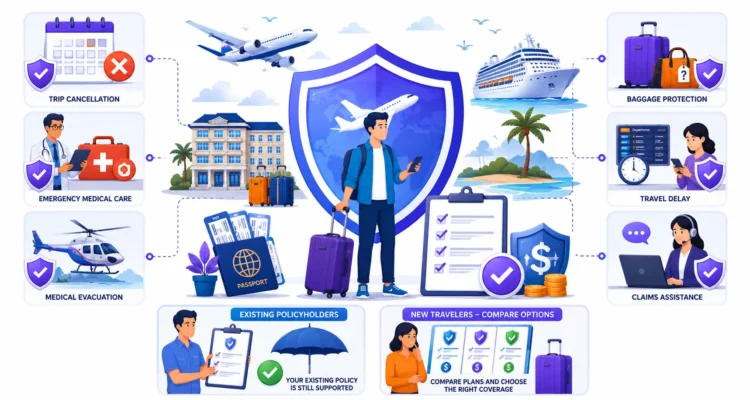
Nationwide Travel Insurance was a travel protection option for U.S. travelers looking for financial protection against certain trip cancellations, interruptions, medical emergencies, baggage problems, delays, and other covered events. However, an important change has taken place: Nationwide states that sales of new travel policies ended on December 15, 2025.
That means travelers researching Nationwide Travel Insurance today need to distinguish between two situations. Existing policyholders who purchased coverage before the cutoff may still have valid benefits and claims rights under their policies, while new customers can no longer purchase a new Nationwide Travel policy directly through the former travel program.
Nationwide’s official travel website states that policies sold and certificates issued before December 15, 2025 will continue to be honored according to their terms. The company also continues to provide customer care, claims contacts, and travel-assistance information for existing policyholders.
This guide explains Nationwide Travel Insurance, what types of protection its plans offered, how existing policyholders can manage claims, what travelers should look for when comparing travel insurance today, and why medical evacuation, trip cancellation, and baggage protection can matter.
For a broader understanding of insurance, claims, liability, and legal protection, visit our complete Insurance and Legal Guide. If you are new to insurance basics, our What Is Insurance? guide explains premiums, deductibles, coverage limits, and claims.
Table of Contents
What Is Nationwide Travel Insurance?
Nationwide Travel Insurance refers to travel protection policies previously offered through Nationwide Mutual Insurance Company and affiliated underwriting arrangements.
Depending on the specific plan and policy, Nationwide Travel Insurance could include benefits relating to:
- Trip cancellation
- Trip interruption
- Trip delay
- Emergency accident and sickness medical expenses
- Emergency medical evacuation
- Repatriation of remains
- Baggage and personal effects
- Baggage delay
- Accidental death and dismemberment in certain plans
- Optional rental car protection in some plans
The exact benefits of Nationwide Travel Insurance depended on the plan purchased, state requirements, policy form, coverage limits, exclusions, and other conditions.
Nationwide’s own policy documents make clear that benefits vary from program to program and that policyholders should rely on their specific confirmation of coverage and policy documents.
Can You Still Buy Nationwide Travel Insurance?
This is now the most important question for anyone researching Nationwide Travel Insurance.
According to the official Nationwide Travel Insurance website, sales of Nationwide Travel policies are no longer available for purchase as of December 15, 2025.
Nationwide states that policies sold and certificates issued before that date will be honored according to their terms.
Therefore, Nationwide Travel Insurance should no longer be presented as a currently available direct-purchase travel insurance product for new customers.
Existing policyholders can still use Nationwide’s published contact information to:
- Ask questions about an existing policy
- Access travel assistance
- File a claim
- Manage an existing plan
New travelers looking for coverage should compare currently available travel insurance providers and policies instead.
9 Essential Facts About Nationwide Travel Insurance
These nine facts provide the clearest overview of Nationwide Travel Insurance and its current status.
1. New Nationwide Travel Insurance Sales Ended in 2025
The biggest current change is that new Nationwide Travel Insurance sales ended on December 15, 2025.
Nationwide’s travel website now primarily supports existing policyholders and redirects people seeking new travel coverage to another comparison source.
2. Existing Policies Are Still Honored According to Their Terms
Travelers who purchased Nationwide Travel Insurance before the sales cutoff do not automatically lose their coverage.
Nationwide states that previously sold policies and issued certificates will continue to be honored according to the relevant policy terms.
This makes it especially important for existing customers to retain:
- Policy documents
- Confirmation of coverage
- Trip receipts
- Claims documentation
- Emergency-assistance contact information
3. Nationwide Offered Several Travel Plan Categories
Official Nationwide travel support information still references:
- Single-trip plans
- Cruise plans
- Annual plans
This demonstrates that Nationwide Travel Insurance was designed for different travel patterns rather than being limited to one standard policy.
4. Trip Cancellation Was a Major Benefit
Trip cancellation insurance can reimburse certain prepaid, non-refundable trip expenses when a traveler must cancel for a covered reason.
For example, official Nationwide Travel Insurance policy documents for certain plans show trip cancellation benefits based on eligible trip costs, subject to policy conditions.
Trip cancellation should not be confused with simply changing your mind. Coverage generally applies only to specified covered reasons unless a policy includes a broader optional benefit.
5. Emergency Medical Coverage Was Available
Some Nationwide Travel Insurance plans included emergency accident and sickness medical expense benefits.
This type of protection can be important when traveling because ordinary domestic health insurance may not provide the same protection abroad.
The U.S. Department of State advises travelers to check whether their health insurance covers medical care outside the United States and recommends considering travel medical insurance where appropriate.
6. Medical Evacuation Coverage Can Be Especially Important
Emergency evacuation is one of the most valuable categories to examine in travel insurance.
Some Nationwide Travel Insurance plans included emergency evacuation and repatriation benefits subject to their limits and policy terms.
The U.S. Department of State travel insurance guidance strongly recommends medical evacuation insurance when traveling to locations with higher risk or limited medical care.
The State Department has also noted that medical evacuation by air ambulance back to the United States can be extremely expensive depending on location and medical condition.
7. Baggage Benefits Had Limits
Another part of Nationwide Travel Insurance involved baggage and personal effects coverage.
However, baggage coverage should never be interpreted as unlimited reimbursement.
Official policy documents show that baggage benefits could include:
- A total maximum benefit
- Per-item limits
- Combined limits for certain valuable categories
- Baggage-delay limits
This is a common feature of travel insurance generally: the policy may cover baggage, but the amount available for individual items can be lower than the total baggage limit.
8. Pre-Existing Condition Rules Could Depend on Purchase Timing
Some Nationwide Travel Insurance plans included provisions relating to pre-existing medical conditions when coverage was purchased within a specified period after the initial trip deposit.
The exact period depended on the policy.
For example, an official Nationwide Travel Prime policy document states that pre-existing-condition coverage can apply when the policy is purchased within a defined number of days following the initial trip deposit, subject to all relevant terms.
This shows why travel insurance should often be considered soon after booking rather than waiting until immediately before departure.
9. Policy Documents Control the Coverage
The most important lesson about Nationwide Travel Insurance is that the policy—not a general online description—determines what is covered.
Every traveler should review:
- Covered reasons
- Benefit limits
- Exclusions
- Pre-existing-condition provisions
- Trip-duration limits
- Claims requirements
- Effective dates
- Optional benefits
What Did Nationwide Travel Insurance Cover?
The exact protection provided by Nationwide Travel Insurance varied by plan, but several categories appeared across policy materials.
Trip Cancellation Coverage
Trip cancellation coverage was designed to reimburse specified prepaid and non-refundable trip costs when a traveler could not take a covered trip for an eligible reason.
Potential covered reasons were defined by the policy and could involve situations such as certain illnesses, injuries, or other listed events.
Travelers should never assume that every cancellation qualifies.
Trip Interruption Coverage
Trip interruption coverage can help when a covered event forces a traveler to cut a trip short after it has already begun.
Depending on the policy, benefits may relate to unused trip expenses and certain additional transportation costs.
Trip Delay Coverage
Some Nationwide Travel Insurance plans provided trip-delay benefits when a covered delay met the policy requirements.
Eligible expenses might be subject to:
- A total benefit limit
- A daily limit
- A minimum required delay
- Specified covered causes
Emergency Medical Expense Coverage
Travel medical coverage can help with certain emergency accident or sickness expenses incurred during the insured trip.
This can be particularly relevant for international travel.
The U.S. Department of State advises travelers to verify whether their domestic health plan applies overseas because many plans may provide limited or no international protection.
Emergency Medical Evacuation
Medical evacuation benefits can help arrange or pay for eligible emergency transportation when appropriate medical care is not available locally.
Some Nationwide Travel Insurance policy documents showed substantially higher limits for emergency evacuation than for ordinary medical-expense benefits.
This reflects the potentially high cost of emergency medical transportation.
Baggage and Personal Effects
Baggage coverage can apply to eligible lost, stolen, or damaged personal belongings subject to the policy.
Individual article limits and exclusions can significantly affect how much reimbursement is available.
Baggage Delay
Baggage-delay coverage can help reimburse certain necessary purchases when checked baggage is delayed for the required period.
The benefit is usually limited and should not be viewed as full replacement coverage for an entire suitcase.
Nationwide Travel Insurance Plan Examples
Historic and current support documents show that Nationwide Travel Insurance offered different plan structures.
Two examples visible in Nationwide’s official policy library include Travel Essential and Travel Prime.
Nationwide Travel Essential
An official Travel Essential certificate included benefits such as:
- Trip cancellation
- Trip interruption
- Trip delay
- Emergency accident and sickness medical expenses
- Emergency evacuation
- Repatriation
- Baggage and personal effects
- Baggage delay
The exact dollar limits depended on the certificate and state version.
Nationwide Travel Prime
An official Travel Prime policy issued in a newer policy form similarly included broad travel benefits and optional features.
Some versions included:
- Trip cancellation
- Trip interruption
- Trip delay
- Missed connection benefits
- Emergency medical coverage
- Emergency evacuation
- Baggage protection
- Optional rental-car damage coverage
Existing customers should use their own Nationwide Travel Insurance confirmation rather than assume another customer’s plan limits apply to them.
How Do Nationwide Travel Insurance Claims Work?
Existing Nationwide Travel Insurance customers can still file claims for eligible losses under active or previously issued policies.
Nationwide’s official travel site lists Co-ordinated Benefit Plans as the claims administrator for different plan categories.
The claims process may broadly involve:
- Report the event according to the policy requirements.
- Open a claim with the applicable claims administrator.
- Gather required documentation.
- Submit receipts, reports, medical documents, or other evidence.
- Respond to additional requests from the claims administrator.
- Review the final coverage decision.
Documentation requirements depend on the type of claim.
Trip Cancellation Claims
Potential documentation may include:
- Booking confirmations
- Cancellation statements
- Proof of non-refundable costs
- Medical evidence where relevant
- Other documents supporting the covered reason
Medical Claims
Travelers may need:
- Medical bills
- Physician records
- Proof of payment
- Other insurance information
Baggage Claims
Supporting records could include:
- Airline reports
- Police reports where applicable
- Receipts
- Proof of ownership
- Documentation showing the delay or loss
What Should Existing Nationwide Travel Insurance Customers Do?
If you already have Nationwide Travel Insurance purchased before the sales cutoff, do not assume the closure of new sales means your policy is invalid.
Nationwide specifically states that issued policies will be honored according to their terms.
Existing policyholders should:
- Keep a copy of the policy certificate.
- Keep the confirmation of coverage.
- Save Nationwide customer-care information.
- Save the 24/7 assistance numbers applicable to the plan.
- Keep the claims administrator details.
- Review exclusions before travel.
- Understand benefit limits.
Do not rely only on an old marketing page or third-party review when making a claim. Your own policy documents are the controlling source.
How Much Does Travel Insurance Usually Cost?
Because new Nationwide Travel Insurance policies are no longer being sold through the former program, there is no useful current Nationwide premium to quote for new customers.
However, travel insurance generally remains widely available from other providers.
The National Association of Insurance Commissioners states that travel insurance commonly costs around 5% to 10% of the total trip price, although rates vary based on destination, age, season, origin, and other factors.
Price should not be the only consideration.
Compare:
- Trip cancellation limits
- Medical coverage
- Medical evacuation
- Baggage coverage
- Delay benefits
- Deductibles
- Exclusions
- Pre-existing-condition rules
How Much Travel Insurance Coverage Do You Need?
There is no universal minimum amount that is right for every traveler.
Your needs depend on:
- Total prepaid trip cost
- Destination
- Length of travel
- Existing health insurance
- Cost of emergency medical care
- Potential evacuation costs
- Value of baggage
- Traveler age
- Planned activities
Someone taking a short domestic trip with refundable reservations may need very different protection from a traveler taking an expensive international cruise.
Why Emergency Medical Evacuation Matters
Medical evacuation deserves special attention when comparing alternatives to Nationwide Travel Insurance.
The U.S. Department of State strongly recommends considering medical evacuation insurance when traveling to destinations where medical care may be limited.
The State Department has reported that air-ambulance evacuation back to the United States can cost tens or even hundreds of thousands of dollars depending on location and health condition.
A low-cost travel insurance policy with a very small evacuation limit may therefore provide less protection than the headline premium suggests.
Can You Get Travel Insurance Through a Bank?
Some banks and credit-card issuers provide certain travel benefits, but this should not automatically be treated as equivalent to a full travel insurance policy.
Benefits may depend on:
- The specific account or card
- Whether the trip was purchased with that card
- Benefit limits
- Covered reasons
- Eligibility rules
If you previously compared bank benefits with Nationwide Travel Insurance, the same principle remains useful today: compare actual coverage rather than assuming the word “travel protection” means every product is equivalent.
What Does Travel Insurance Usually Not Cover?
Travel insurance is not designed to protect against every possible problem.
Possible exclusions can include:
- Events not listed as covered reasons
- Known circumstances existing before purchase
- Certain pre-existing conditions unless requirements are met
- Excluded sports or activities
- Intentional acts
- Losses exceeding benefit limits
- Uninsured portions of a trip
Exact exclusions vary by plan.
The same was true for Nationwide Travel Insurance: customers needed to read the actual policy rather than rely on the product name alone.
How to Choose Travel Insurance Now
With new Nationwide Travel Insurance sales no longer available, travelers should compare other currently available policies carefully.
1. Calculate Your Non-Refundable Trip Cost
Know how much money you could realistically lose if you need to cancel.
2. Check International Medical Coverage
Verify what your existing health plan provides outside your home country.
3. Examine Emergency Evacuation Limits
This benefit can be especially important for remote or international destinations.
4. Read Covered Cancellation Reasons
Do not assume every reason for cancellation is insured.
5. Check Pre-Existing Condition Rules
Timing requirements can matter.
6. Compare Baggage Limits
Look at both total limits and per-item restrictions.
7. Review Trip Delay Requirements
Check the minimum delay period and daily benefit.
8. Compare Exclusions
A cheap policy with broad exclusions may not provide the protection you expect.
9. Check the Insurer and Claims Process
Understand who underwrites the coverage and how claims are filed.
Nationwide Travel Insurance vs General Travel Insurance
The key difference today is availability.
Nationwide Travel Insurance refers to policies previously sold through Nationwide’s travel program. New sales ended in December 2025.
General travel insurance remains available from many other providers and can offer similar categories of benefits depending on the policy.
When comparing alternatives, focus on:
- Coverage quality
- Medical limits
- Evacuation protection
- Cancellation benefits
- Claims service
- Exclusions
- Price
Travel Insurance and the Wider Insurance & Legal Framework
Travel insurance forms one part of a broader risk-management strategy.
A serious event abroad can involve:
- Medical treatment
- Emergency transportation
- Trip cancellation
- Lost baggage
- Liability issues
- Contract disputes
- Insurance claims
That is why Nationwide Travel Insurance belongs within our broader Insurance and Legal Guide.
If you want to understand other specialized coverage, see our What Is Marine Insurance? guide. Homeowners can also explore our Homeowners Insurance in the United States guide.
Frequently Asked Questions About Nationwide Travel Insurance
What is Nationwide Travel Insurance?
Nationwide Travel Insurance refers to travel insurance plans previously underwritten through Nationwide’s travel program, with benefits that could include trip cancellation, medical expenses, evacuation, baggage protection, and delays depending on the policy.
Can I still buy Nationwide Travel Insurance?
No new Nationwide Travel Insurance policies have been available for purchase through the former program since December 15, 2025.
What happens to existing Nationwide Travel Insurance policies?
Nationwide states that policies sold and certificates issued before the cutoff will be honored according to their terms.
Does Nationwide Travel Insurance cover trip cancellation?
Many historical Nationwide Travel Insurance plans included trip cancellation benefits for specified covered reasons, subject to policy limits and conditions.
Does Nationwide Travel Insurance cover medical emergencies?
Some plans included emergency accident and sickness medical expense benefits. Existing customers should check their own schedule of benefits.
Does Nationwide Travel Insurance cover medical evacuation?
Many policy versions included emergency evacuation coverage, with limits depending on the plan.
Does Nationwide Travel Insurance cover baggage?
Some plans included baggage and personal-effects benefits plus baggage-delay protection, subject to overall and per-item limits.
Can existing customers still file a claim?
Yes. Nationwide continues to publish claims information for existing Nationwide Travel Insurance policyholders.
Does travel insurance cover every trip cancellation?
No. Standard trip cancellation coverage applies only to specified covered reasons unless a broader optional benefit applies.
How much does travel insurance generally cost?
NAIC states that travel insurance commonly costs roughly 5% to 10% of total trip price, although actual pricing varies.
Is travel medical insurance important internationally?
It can be. The U.S. Department of State advises travelers to verify overseas health coverage and strongly recommends medical evacuation coverage in higher-risk or medically limited destinations.
Is Nationwide Travel Insurance still worth researching?
Yes for existing policyholders, because understanding the benefits, claims process, and terms remains important. New travelers, however, should compare currently available alternatives because new Nationwide Travel Insurance sales have ended.
Why did Nationwide Travel Insurance stop new sales?
Nationwide’s current travel site confirms the end of new-policy sales but does not provide a detailed public explanation on that page for the business decision. It would be inappropriate to speculate about the reason.
Explore More Insurance & Legal Resources
This Nationwide Travel Insurance guide is part of our wider Insurance & Legal content cluster.
- Insurance and Legal Guide — our main pillar covering insurance, liability, claims, and legal protection.
- What Is Insurance? — understand premiums, deductibles, policy limits, and claims.
- Homeowners Insurance in the United States — learn about property and liability protection for homeowners.
- What Is Marine Insurance? — understand cargo, vessel, and maritime risk coverage.
- Liability Insurance and Its Types — learn how liability protection differs from property and travel insurance.
Final Thoughts
Nationwide Travel Insurance was a well-established travel protection option offering various benefits through single-trip, cruise, annual, and other plan structures.
However, travelers researching Nationwide Travel Insurance today need to know that new policy sales ended on December 15, 2025.
Existing customers should not assume their coverage disappeared. Nationwide specifically states that previously sold policies will be honored according to their terms, and claims and assistance resources remain available.
The main lesson from Nationwide Travel Insurance remains useful when comparing any travel policy: read the actual benefits, limits, exclusions, cancellation reasons, medical protection, evacuation coverage, baggage limits, and claims requirements.
Travel insurance should match the financial risk of the trip. An inexpensive domestic weekend may require very different protection from an international cruise or a journey to a region with limited medical facilities.
If you are purchasing new coverage today, compare currently available insurers rather than relying on outdated Nationwide Travel Insurance buying guides that still suggest new Nationwide policies can be purchased.
For a wider understanding of travel protection alongside property insurance, liability, claims, and legal issues, continue with our complete Insurance and Legal Guide.
This article is provided for general educational purposes only and does not constitute insurance, legal, medical, or financial advice. Travel insurance benefits, exclusions, eligibility, policy forms, limits, and availability vary by provider and jurisdiction. Existing Nationwide policyholders should rely on their own certificate and confirmation of coverage.
