Liability Insurance and Its Types: Complete Guide for Business Owners
 Kamran Liaquat Ali
- posted on
- No Comment

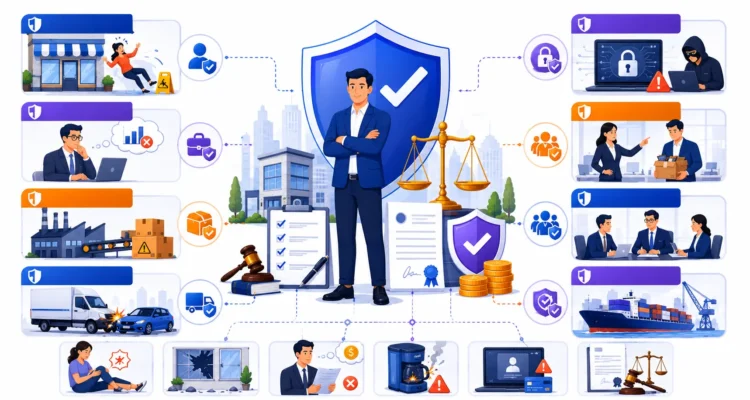
Liability insurance and its types are an important part of financial risk management for businesses of almost every size. A company can face claims involving customer injuries, damaged property, professional mistakes, defective products, advertising disputes, employee-related allegations, vehicle accidents, or other legal responsibilities.
Understanding liability insurance and its types can help business owners identify which risks are most relevant to their operations and which type of insurance may be designed to address them. A retailer, consultant, manufacturer, contractor, technology company, restaurant, professional service firm, and logistics business can all face different liability exposures.
The purpose of liability insurance is not to prevent lawsuits or remove every business risk. Instead, it can provide financial protection against specified covered claims according to the policy’s terms, limits, exclusions, deductibles, and conditions.
A strong understanding of liability insurance and its types is especially useful because one liability policy does not automatically cover every possible claim. General liability, professional liability, product liability, cyber liability, commercial auto liability, and employment-related coverage are designed for different risks.
This guide explains liability insurance and its types in detail, including the major forms of liability coverage, what they may cover, common exclusions, legal defense costs, policy limits, Business Owners Policies, claims, pricing factors, and how businesses can choose suitable protection.
For a wider overview of insurance, claims, property protection, and legal issues, visit our complete Insurance and Legal Guide. If you want to understand insurance fundamentals first, see our What Is Insurance? guide.
Table of Contents
What Is Liability Insurance?
Before exploring liability insurance and its types, it is important to understand what liability insurance actually means.
Liability insurance is designed to provide specified financial protection when an insured individual or business becomes legally responsible for a covered injury, property damage, professional error, or another insured liability.
Depending on the policy, liability coverage may help address:
- Bodily injury claims
- Property damage claims
- Legal defense expenses
- Covered settlements
- Covered court judgments
- Personal and advertising injury
- Professional negligence claims
- Product-related liability
The exact protection provided by liability insurance and its types depends on the individual policy. Businesses should therefore rely on policy wording rather than assuming every lawsuit or claim is covered.
For an authoritative overview of small-business insurance, visit the National Association of Insurance Commissioners small-business insurance resources.
Why Liability Insurance and Its Types Matter to Businesses
The main reason businesses should understand liability insurance and its types is that even ordinary business activities can create legal exposure.
For example, a customer might slip inside a store. A contractor could accidentally damage a client’s property. A consultant may be accused of giving incorrect professional advice. A manufacturer could face a claim alleging that a product caused an injury.
Each situation involves a different type of risk.
Without appropriate insurance, a company may need to pay legal defense costs, settlements, judgments, and other expenses using its own money.
This is why liability insurance and its types should be viewed as part of a broader business risk-management strategy rather than as a single generic policy.
9 Powerful Facts About Liability Insurance and Its Types
These nine facts make it easier to understand liability insurance and its types before comparing business insurance policies.
1. General Liability Is One of the Most Common Types
General liability insurance is one of the central categories within liability insurance and its types.
It can provide protection against certain third-party claims involving bodily injury, property damage, and personal or advertising injury.
For example, if a customer slips on a wet floor inside a shop and alleges that the business was responsible for the injury, general liability coverage may become relevant according to the policy.
2. Professional Liability Covers Different Risks
When studying liability insurance and its types, business owners should not confuse general liability with professional liability.
Professional liability is designed primarily for businesses that provide professional services, expertise, recommendations, designs, or advice.
Claims may allege errors, negligence, omissions, or failures connected with professional services.
3. Product Liability Matters to Manufacturers and Sellers
Product liability is another major area within liability insurance and its types.
Businesses that manufacture, distribute, supply, or sell physical products can face claims alleging that those products caused bodily injury or property damage.
Product liability exposure can therefore affect:
- Manufacturers
- Wholesalers
- Distributors
- Retailers
- Importers
4. Liability Insurance Does Not Cover Every Claim
A realistic guide to liability insurance and its types must explain exclusions as well as benefits.
Policies may exclude or limit claims involving:
- Intentional injury
- Fraud
- Criminal acts
- Known losses
- Certain contractual liabilities
- Professional mistakes under ordinary general liability
- Cyber incidents without suitable cyber coverage
- Employment disputes without appropriate coverage
5. Legal Defense Costs Can Be Extremely Important
One of the major benefits associated with liability insurance and its types can be legal defense protection.
A lawsuit can cost significant money even when the business ultimately succeeds in defending the claim.
Depending on the policy, eligible defense expenses may include attorney fees and other costs associated with defending a covered claim.
6. A Business Owners Policy Can Include Liability Coverage
Businesses researching liability insurance and its types will frequently encounter the term Business Owners Policy, commonly called a BOP.
A BOP can combine several important protections into one insurance package, commonly including:
- Business property insurance
- General liability insurance
- Business income or interruption coverage
However, a BOP does not necessarily include every specialized form of liability insurance a business may need.
7. Policy Limits Matter
A key part of understanding liability insurance and its types is understanding policy limits.
A liability policy may use:
- Per-occurrence limits
- Aggregate limits
- Separate sublimits
If a claim exceeds the available limit, the business may still have financial exposure beyond the insurance protection.
8. Different Businesses Need Different Liability Coverage
There is no universal combination of liability insurance and its types that suits every company.
A software consultant may need strong professional and cyber liability protection. A retailer may place more emphasis on general and product liability. A transportation company may have significant commercial auto liability exposure.
9. Liability Needs Change as a Business Grows
The appropriate combination of liability insurance and its types can change over time.
New locations, employees, clients, products, contracts, vehicles, and services can create risks that were not present when the original insurance policy was purchased.
Major Types of Liability Insurance
The most important step in understanding liability insurance and its types is learning what the major categories are designed to do.
General Liability Insurance
General liability insurance is one of the most common forms of business liability protection.
Depending on the policy, coverage may address claims involving:
- Third-party bodily injury
- Third-party property damage
- Personal injury
- Advertising injury
Among liability insurance and its types, general liability is often considered a foundational business policy because many companies interact physically with customers, suppliers, contractors, or members of the public.
You can review additional educational information from the Insurance Information Institute’s commercial general liability guide.
Professional Liability Insurance
Professional liability insurance protects against a different category of risk.
This form of liability insurance and its types is commonly relevant to businesses providing professional expertise, services, designs, analysis, or advice.
Examples can include:
- Consultants
- Accountants
- Technology professionals
- Design professionals
- Advisers
- Other specialized service providers
Professional liability is sometimes known as errors and omissions insurance in certain professions and markets.
A professional liability claim might allege:
- A professional mistake
- Negligent advice
- Failure to perform a service
- An omission
- Financial harm caused by professional work
Product Liability Insurance
Product liability is another significant category within liability insurance and its types.
It can be relevant to companies involved in creating or supplying products to consumers or businesses.
A claim might allege that a product:
- Was defective
- Caused bodily injury
- Damaged property
- Contained inadequate warnings
Companies selling physical goods should understand how product liability is treated within their broader insurance program.
Cyber Liability Insurance
Modern discussions of liability insurance and its types increasingly include cyber liability.
Businesses that collect, process, transmit, or store sensitive information can face financial and legal consequences after a cyber incident.
Depending on the policy, cyber insurance can address risks involving:
- Data breaches
- Privacy claims
- Network incidents
- Notification expenses
- Cyber-related legal expenses
- Data restoration in certain situations
Businesses should not assume ordinary general liability automatically provides complete protection against cyber incidents.
Employment Practices Liability Insurance
Employment Practices Liability Insurance, commonly called EPLI, addresses certain employment-related allegations.
This category of liability insurance and its types can involve claims such as:
- Discrimination
- Harassment
- Wrongful termination
- Other covered employment practices
Companies with employees may therefore have liability exposures that ordinary general liability insurance does not fully address.
Directors and Officers Liability Insurance
Directors and Officers insurance, usually known as D&O insurance, protects against certain claims involving decisions or alleged wrongful acts by directors and officers.
Within liability insurance and its types, D&O coverage may be relevant to:
- Corporations
- Nonprofit organizations
- Companies with formal boards
- Organizations with investors
Commercial Auto Liability Insurance
Businesses that own or operate vehicles can face road-related liability.
Commercial auto liability is another important part of liability insurance and its types because ordinary general liability should not automatically be assumed to cover motor vehicle accidents.
Coverage may become relevant if an insured business vehicle causes injury or property damage according to the policy.
Marine Liability Insurance
Marine businesses can face specialized liability risks involving vessels, ports, cargo operations, terminals, shipbuilding, and other maritime activities.
Marine liability therefore belongs within the wider discussion of liability insurance and its types.
Read our What Is Marine Insurance? guide for a detailed explanation of marine cargo, hull, and liability risks.
General Liability vs Professional Liability
One of the most common areas of confusion in liability insurance and its types is the difference between general liability and professional liability.
General liability insurance usually focuses on claims involving bodily injury, property damage, and certain personal or advertising injury.
Professional liability insurance focuses on certain claims connected to professional services, errors, negligence, or advice.
Consider two examples.
If a client slips on the floor of a consulting office, general liability may be relevant.
If that same consulting firm is accused of providing negligent professional advice that causes a client financial loss, professional liability may be more relevant.
This comparison shows why understanding liability insurance and its types is more useful than simply asking whether a company “has liability insurance.”
Product Liability vs General Liability
Product liability and general liability can overlap in certain insurance arrangements, but businesses should understand their product exposure specifically.
A company that manufactures or sells goods can face allegations relating to defects, injuries, property damage, warnings, or product safety.
When evaluating liability insurance and its types, manufacturers, distributors, wholesalers, and retailers should confirm how their policy handles product-related claims.
What Does Liability Insurance Cover?
The exact answer depends on the policy, but liability insurance and its types may provide protection for several major categories of claims.
Bodily Injury
Bodily injury claims involve allegations that the business caused physical injury to another person.
A customer slipping in a shop is a common example.
Property Damage
A business can be accused of damaging property belonging to someone else.
For example, a contractor performing work at a client’s building could accidentally damage the client’s property.
Personal and Advertising Injury
Certain general liability policies may provide protection for covered claims involving issues such as libel, slander, or specified advertising injuries.
Professional Errors
Professional liability may address eligible claims involving errors, omissions, or negligence in professional services.
Product-Related Claims
Product liability protection may respond to certain claims alleging injury or property damage caused by a product.
Legal Defense Costs
Legal defense is an important element of liability insurance and its types.
Depending on the policy, insurance may help pay eligible attorney fees and defense expenses connected with a covered lawsuit.
Settlements and Judgments
Liability insurance may also help pay covered settlements or court judgments up to applicable policy limits.
What Liability Insurance May Not Cover
Businesses evaluating liability insurance and its types should pay close attention to exclusions.
Depending on the policy, common areas that may require separate protection or may be excluded include:
- Intentional acts
- Criminal conduct
- Fraud
- Known circumstances
- Workers’ compensation obligations
- Professional errors under a general liability policy
- Commercial vehicle accidents under ordinary general liability
- Cyber incidents without cyber coverage
- Certain employment disputes
This is another reason liability insurance and its types should be evaluated individually rather than treating general liability as universal protection.
Who Needs Liability Insurance?
Many different organizations should evaluate liability insurance and its types.
Examples include:
- Retail stores
- Restaurants
- Manufacturers
- Wholesalers
- Contractors
- Consultants
- Technology companies
- Professional service businesses
- Property-related businesses
- Transportation companies
- Home-based businesses
The important question is not simply whether a business is large or small. It is whether its operations could create financial responsibility for injury, damage, professional errors, or another covered legal claim.
Do Small Businesses Need Liability Insurance?
Small businesses should pay particular attention to liability insurance and its types because they may have fewer financial resources available to absorb a major lawsuit.
A small company may consider several forms of coverage depending on its activities:
- General liability
- Professional liability
- Product liability
- Cyber liability
- Commercial auto liability
- Employment practices liability
A freelance consultant, for example, may place greater importance on professional liability, while a shop may be more exposed to general liability and product-related claims.
Understanding liability insurance and its types helps small businesses prioritize the risks that could create the greatest financial impact.
What Is a Business Owners Policy?
A Business Owners Policy is frequently discussed alongside liability insurance and its types.
A BOP is a package designed for certain eligible businesses and commonly combines several types of protection.
These may include:
- Business property coverage
- General liability coverage
- Business income or interruption coverage
A BOP can be convenient, but specialized risks may still require separate policies.
For example, a company may still need professional liability, commercial auto, cyber, or employment practices coverage depending on its operations.
Our What Is Business Property Insurance? guide explains the property side of business insurance in greater detail.
How Much Liability Insurance Does a Business Need?
There is no universal amount suitable for every company.
Determining suitable protection requires looking at the actual exposure created by liability insurance and its types.
Businesses should consider:
- Industry
- Business size
- Number of customers
- Business locations
- Products sold
- Services provided
- Contract requirements
- Potential severity of injuries
- Company assets
- Claims history
The old idea that every company should simply buy insurance equal to a fixed percentage of revenue is too simplistic.
The required limits should instead reflect the nature and possible financial size of the company’s liability exposure.
What Affects the Cost of Liability Insurance?
The cost of liability insurance and its types varies between businesses and insurance products.
Potential pricing factors can include:
- Industry
- Location
- Annual revenue
- Payroll or employee count
- Claims history
- Coverage limits
- Deductibles
- Products sold
- Professional services offered
- Customer traffic
- Business vehicles
- Other risk characteristics
Different insurers may assess the same company differently, which is why comparing policy terms as well as premiums can be useful.
How to Choose Liability Insurance and Its Types
Once a business understands liability insurance and its types, the next step is deciding which coverage matches its actual operations.
1. Identify Major Liability Risks
Think about how customers, clients, products, employees, vehicles, services, and physical locations could create claims.
2. Separate Different Types of Exposure
Do not assume one policy covers everything.
Separate risks involving:
- Customer injuries
- Professional services
- Products
- Cyber incidents
- Employees
- Commercial vehicles
3. Compare Policy Limits
Review the maximum amount of insurance available under each part of the policy.
4. Read Exclusions Carefully
The exclusions in liability insurance and its types can reveal important gaps in protection.
5. Understand Defense Costs
Ask how legal defense costs interact with liability limits.
6. Check Contract Requirements
Clients, landlords, lenders, or other business partners may require specific coverage or minimum limits.
7. Review Coverage Regularly
A growing company should reconsider its insurance whenever it adds products, employees, vehicles, customers, services, or locations.
How Does a Liability Insurance Claim Work?
The claims process is another important part of understanding liability insurance and its types.
Although procedures vary, a liability claim can broadly involve:
- A third party alleges injury, damage, negligence, or another liability.
- The business reports the claim to its insurer according to the policy.
- The insurer reviews the circumstances and coverage.
- Legal defense may be arranged for an eligible covered claim.
- The claim may be investigated, defended, negotiated, settled, or litigated.
- Covered payments may be made according to policy limits and terms.
Businesses should preserve documents and evidence relating to the incident.
Useful information may include:
- Contracts
- Photographs
- Witness information
- Incident reports
- Emails and correspondence
- Product records
- Professional work records
- Other relevant documentation
Liability Insurance vs Business Property Insurance
This comparison is central to understanding liability insurance and its types.
Business property insurance generally protects insured physical assets owned or used by the company.
Liability insurance generally addresses specified legal claims alleging that the business caused injury, property damage, professional harm, or another covered loss.
For example:
- A fire damages your company’s machinery — primarily a property insurance issue.
- Your business damages a customer’s property — potentially a liability issue.
Businesses may need both types of insurance.
Liability Insurance and Homeowners Coverage
The concept of liability insurance and its types also extends beyond commercial businesses.
Homeowners insurance often includes personal liability coverage for certain situations where an insured homeowner becomes legally responsible for injury or property damage.
However, homeowners insurance should not automatically be assumed to cover commercial operations conducted from a home.
Read our Homeowners Insurance in the United States guide for a complete explanation of property and liability protection for homeowners.
Liability Insurance and Car Accidents
Automobile liability is another major example of liability insurance and its types.
Vehicle accidents can create legal responsibility for injury or property damage.
Personal or commercial auto insurance may provide liability protection according to the applicable policy and legal requirements.
Serious accidents can also create disputes involving fault, insurance coverage, medical expenses, and compensation.
Our Car Accident Legal Resource Center explains accident claims and legal issues in greater depth.
Common Liability Insurance Mistakes
A business can understand the basics of liability insurance and its types and still make important insurance mistakes.
Assuming General Liability Covers Everything
General liability does not automatically replace professional liability, commercial auto, cyber, or employment-related coverage.
Buying Coverage Only Based on Price
A lower premium may also involve different limits, exclusions, or protection.
Ignoring Product Liability
Businesses that manufacture, distribute, or sell goods should evaluate product-related risks carefully.
Ignoring Professional Exposure
Companies selling expertise rather than physical goods may still face significant claims.
Choosing Inadequate Limits
Low liability limits can leave a business exposed if a serious claim exceeds the policy.
Failing to Update Coverage
New products, services, employees, and locations can change liability exposure.
Not Reading Exclusions
Understanding exclusions is essential when evaluating liability insurance and its types.
Liability Insurance and Its Types for Different Businesses
The best way to understand liability insurance and its types is to see how coverage needs can differ between industries.
Retail Business
A retailer may be exposed to customer injuries, property damage, and product liability.
Consulting Business
A consultant may place greater emphasis on professional liability because clients can allege that advice or services caused financial loss.
Manufacturing Business
A manufacturer may need general liability plus significant product liability protection.
Technology Company
A technology company may face professional and cyber liability risks in addition to ordinary business liability.
Transportation Company
A transportation company may need commercial auto liability and other specialized policies.
Marine Business
A maritime company may have specialized marine liability risks that ordinary general liability does not fully address.
These examples show why liability insurance and its types need to be evaluated based on actual business activities.
Frequently Asked Questions About Liability Insurance and Its Types
What is liability insurance?
Liability insurance provides specified financial protection when an insured individual or business becomes legally responsible for a covered injury, property damage, professional error, or another liability.
What are liability insurance and its types?
Liability insurance and its types include different forms of protection designed for different legal risks. Common examples include general liability, professional liability, product liability, cyber liability, employment practices liability, directors and officers liability, commercial auto liability, and marine liability.
What does general liability insurance cover?
General liability commonly addresses certain third-party bodily injury, property damage, personal injury, and advertising injury claims.
What is professional liability insurance?
Professional liability is designed for certain claims alleging errors, negligence, omissions, or failures connected with professional services.
What is product liability insurance?
Product liability insurance can protect businesses against specified claims alleging that products caused injury or property damage.
What is cyber liability insurance?
Cyber liability insurance can address certain digital and privacy-related risks, including data breaches and other covered cyber incidents.
Does liability insurance pay legal fees?
Many liability policies can help pay eligible defense expenses associated with covered claims, subject to the policy.
Does every business need liability insurance?
Not every business has identical legal requirements or risks, but almost any company can face some form of liability exposure.
Is liability insurance legally required?
Requirements depend on the jurisdiction, profession, industry, contracts, and type of liability coverage involved.
What is the difference between general and professional liability?
General liability primarily addresses certain third-party bodily injury and property damage risks, while professional liability addresses claims connected with professional services, advice, errors, or negligence.
What is the difference between liability insurance and property insurance?
Property insurance protects specified assets belonging to the insured business. Liability insurance protects against certain claims made by other parties alleging that the business is legally responsible for injury or damage.
Can a Business Owners Policy include liability insurance?
Yes. A BOP commonly includes general liability together with business property and business income coverage.
Does general liability cover professional mistakes?
Professional errors should not automatically be assumed to be covered by ordinary general liability. Professional liability may be required.
Does liability insurance cover cyber incidents?
Ordinary general liability should not automatically be relied upon for cyber risks. Dedicated cyber coverage may be needed.
How much liability insurance does a small business need?
There is no universal amount. Limits should reflect the business’s operations, contracts, industry, assets, products, services, customers, and potential claim severity.
Why should businesses understand liability insurance and its types?
Businesses should understand liability insurance and its types because different activities create different forms of legal and financial exposure. Identifying those differences can help prevent major gaps in insurance protection.
Explore More Insurance & Legal Resources
This guide to liability insurance and its types is part of our wider Insurance & Legal content collection.
- Insurance and Legal Guide — our main pillar covering insurance, liability, claims, and legal protection.
- What Is Insurance? — understand insurance policies, premiums, deductibles, coverage limits, and claims.
- What Is Business Property Insurance? — learn how businesses can protect buildings, equipment, machinery, and inventory.
- Homeowners Insurance in the United States — understand personal property and liability protection for homeowners.
- What Is Marine Insurance? — explore cargo, vessel, and marine liability risks.
- Car Accident Legal Resource Center — understand liability, insurance, and legal issues following a vehicle accident.
Final Thoughts
Liability insurance and its types are a critical part of protecting a business against the financial consequences of certain legal claims.
General liability can address bodily injury, property damage, and certain personal or advertising injuries. Professional liability focuses on risks arising from professional services. Product liability addresses claims connected to products. Cyber, employment, management, auto, and marine liability policies deal with other specialized risks.
The central lesson about liability insurance and its types is that no single policy automatically protects a business against every possible liability.
A company should examine its customers, products, professional services, employees, vehicles, contracts, locations, and digital activities before deciding which liability insurance and its types are relevant.
Businesses should also review policy limits, exclusions, defense provisions, deductibles, and contractual requirements before purchasing coverage.
As a business grows, the correct combination of liability insurance and its types may change. A company that starts with only general liability may later require product, professional, cyber, commercial auto, employment practices, or other specialized protection.
Ultimately, understanding liability insurance and its types helps business owners make better insurance decisions, recognize potential gaps, and avoid assuming that one policy can address every financial risk.
Use this guide to liability insurance and its types together with our complete Insurance and Legal Guide to understand how liability protection connects with business property insurance, homeowners insurance, accident claims, and wider legal protection.
This article is provided for general educational purposes only and does not constitute insurance, legal, or financial advice. Insurance coverage, exclusions, limits, legal requirements, and business risks vary by insurer, jurisdiction, industry, and individual circumstances. Review actual policy documents and obtain qualified professional advice where necessary.
