Thermal Power Plant: 9 Powerful Systems Explained
 Kamran Liaquat Ali
- posted on
- No Comment

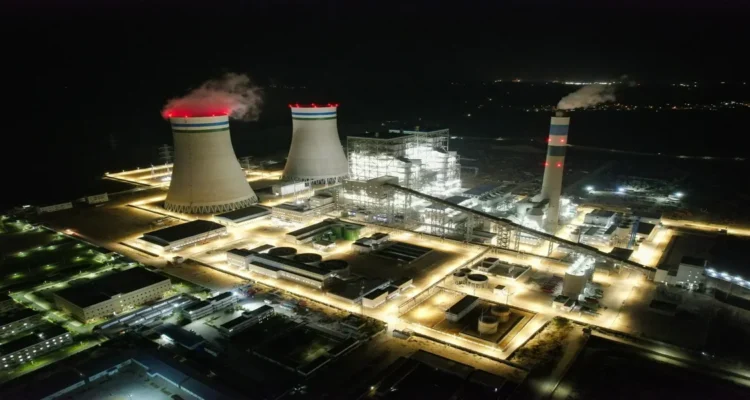
A thermal power plant converts heat into electricity by using a working fluid, a turbine or engine, and an electrical generator. Most large stations burn coal, natural gas, oil, or biomass, while nuclear and geothermal stations obtain heat from other sources. Although the equipment differs, the central engineering challenge is the same: convert as much heat as practical into reliable electrical output while controlling cost, safety, water use, and emissions.
Table of Contents
This evergreen guide explains the complete thermal power plant process, its nine main systems, thermal power plant types, efficiency, environmental controls, operation, maintenance, economics, and future role. For broader industrial context, explore our engineering and manufacturing guide, which connects power generation with heat transfer, automation, simulation, and modern production.
What Is a Thermal Power Plant?
A thermal power plant is an energy-conversion facility. It receives heat from a fuel or natural source, transfers that heat to a working fluid, extracts mechanical work, and converts the work into electricity. In a conventional steam thermal power plant, water is heated in a boiler until it becomes high-pressure steam. The steam expands through a turbine connected to a generator. A condenser then turns the exhaust steam back into water so it can circulate again.
Not every thermal power plant uses the same cycle. A gas-turbine thermal power plant burns fuel in compressed air and sends hot gases directly through a turbine. A combined-cycle thermal power plant uses the gas turbine exhaust to produce steam for a second turbine. Nuclear, geothermal, solar-thermal, and biomass facilities also fit the broad thermal category because heat remains the primary input.
How Does a Thermal Power Plant Work?
The short answer is that heat creates a pressure and temperature difference that drives a turbine. The turbine rotates a generator, where electromagnetic induction produces electrical current. Transformers raise the voltage so electricity can travel efficiently through the transmission grid.
- Fuel or another heat source supplies thermal energy.
- The boiler, combustor, reactor, or heat exchanger transfers energy to a working fluid.
- High-energy steam or gas expands through a turbine.
- The turbine shaft drives an electrical generator.
- A transformer raises generator voltage for transmission.
- Cooling equipment rejects unused heat.
- Pumps, fans, controls, and treatment systems return the process to stable conditions.
Energy is conserved throughout this process, but not all input heat becomes electricity. Some energy leaves in exhaust gas, cooling water, radiation, auxiliary equipment, and other losses. Engineers therefore evaluate the entire station rather than the turbine alone.
The Rankine Cycle in Simple Terms
Most steam stations are based on the Rankine cycle. A feedwater pump raises the pressure of liquid water. The boiler adds heat and produces superheated steam. The steam expands through turbine stages and produces shaft work. The condenser removes remaining heat and changes the steam back into liquid, completing the loop.
Real plants improve this basic cycle through superheating, reheating, regenerative feedwater heating, higher steam conditions, and lower condenser pressure. Each improvement must be balanced against metallurgy, complexity, maintenance, water availability, and cost. The performance of a thermal power plant depends on how well these subsystems operate together.
9 Main Systems in a Thermal Power Plant
1. Fuel Receiving and Preparation
Coal stations use conveyors, crushers, bunkers, feeders, and pulverizers to prepare fuel for controlled combustion. Gas stations require pressure regulation, filtration, metering, and safe isolation. Oil and biomass have their own storage, handling, fire-protection, and quality requirements. Fuel consistency affects heat release, emissions, slagging, equipment wear, and output.
2. Boiler and Combustion System
The boiler transfers combustion heat to water and steam. Its furnace must maintain stable combustion while water-wall tubes absorb radiant heat. Superheaters and reheaters raise steam temperature, while economizers recover exhaust heat to warm feedwater. Air preheaters may use remaining flue-gas energy to improve combustion efficiency.
3. Steam Turbine
The steam turbine converts pressure and temperature into rotation. Large machines normally have high-, intermediate-, and low-pressure sections. Nozzles accelerate steam, blades extract momentum, and seals control leakage. Bearings support the rotor while lubrication and governing systems maintain safe operation. Overspeed protection is essential because stored rotational energy is enormous.
4. Generator and Electrical System
The generator uses a rotating magnetic field to induce current in stationary windings. Excitation controls voltage and reactive power. Protection relays detect faults, while breakers isolate equipment when required. Step-up transformers connect the unit to the grid. Auxiliary transformers supply pumps, fans, mills, lighting, controls, and safety systems inside the station.
5. Condenser and Cooling System
The condenser creates a low-pressure outlet for the turbine and recovers clean water for reuse. Cooling may use a river, sea, lake, cooling tower, or air-cooled condenser. Water-cooled systems can offer strong performance but require responsible withdrawal and discharge management. Air cooling reduces water demand but can lose efficiency during hot weather.
6. Feedwater and Water-Treatment System
Condensate pumps, feedwater heaters, deaerators, and boiler-feed pumps return water to the boiler at the correct pressure, temperature, and chemistry. Dissolved oxygen, minerals, silica, and contamination can cause corrosion, deposits, overheating, or turbine damage. Treatment, sampling, monitoring, and carefully controlled chemical dosing protect expensive equipment.
7. Air, Flue Gas, and Emissions Control
Forced-draft fans supply combustion air, induced-draft fans move flue gas, and ductwork connects the furnace to environmental controls and the stack. Depending on fuel and regulation, equipment may include electrostatic precipitators or fabric filters for particles, scrubbers for sulfur compounds, and combustion controls or catalytic systems for nitrogen oxides.
8. Ash and Waste-Handling System
Solid-fuel stations produce bottom ash, fly ash, wastewater sludge, and other residues. Collection, transport, storage, reuse, and disposal must prevent dust, groundwater contamination, and structural failure. Beneficial uses can include cement and construction products when material quality and applicable standards permit.
9. Instrumentation, Control, and Protection
A distributed control system coordinates combustion, steam conditions, turbine speed, generator output, feedwater, cooling, and emissions. Sensors measure pressure, temperature, flow, vibration, chemistry, electrical conditions, and equipment status. Alarms inform operators; interlocks prevent unsafe sequences; trips shut down equipment when protective limits are reached.
Major Types of Thermal Power Plants
Coal-Fired Steam Plants
Coal-fired stations can produce large, steady output and may use locally available fuel. Their disadvantages include high carbon emissions, complex fuel and ash handling, air pollutants, long start times, and substantial water needs. Modern controls reduce certain pollutants but do not eliminate the underlying carbon intensity.
Natural-Gas Power Plants
Simple-cycle gas turbines can start quickly and help balance demand. Combined-cycle plants add a heat-recovery steam generator and steam turbine, extracting more electricity from the same fuel. Gas generally produces less carbon dioxide and fewer local pollutants than coal per unit of electricity, but methane leakage and fuel-price exposure remain important.
Oil-Fired Plants
Oil may power steam boilers, turbines, or reciprocating engines. Such facilities can support islands, remote grids, emergencies, or peak demand, but fuel cost and emissions often limit continuous use. Storage and spill prevention are essential parts of thermal power plant design.
Nuclear, Biomass, Geothermal, and Solar-Thermal Plants
Nuclear stations use fission heat rather than combustion. Biomass plants burn organic material or derived fuels. Geothermal plants obtain heat from underground resources, while concentrated solar plants collect sunlight as high-temperature heat. Each uses specialized equipment, yet turbines, generators, condensers, cooling, and grid systems remain familiar.
Thermal Power Plant Efficiency
Thermal efficiency is electrical output divided by fuel-energy input, using consistent units and boundaries. Net efficiency subtracts power consumed by pumps, fans, mills, cooling equipment, and other auxiliaries. Heat rate expresses the fuel energy needed to produce a unit of electricity; a lower heat rate normally indicates better performance.
Efficiency depends on cycle type, steam or gas conditions, condenser pressure, ambient temperature, fuel quality, load, equipment condition, fouling, leakage, and operating practice. Combined-cycle gas stations generally achieve higher efficiencies than conventional steam stations. Cogeneration can use exhaust heat for industry or district heating, raising total useful-energy utilization.
A realistic improvement program begins with trustworthy measurements and an energy balance. Teams then investigate condenser cleanliness, excess air, steam leaks, insulation, feedwater heaters, turbine condition, soot blowing, auxiliary loads, and controls. Small improvements can save significant fuel across many operating hours.
Heat Exchangers and Cooling Equipment
Heat transfer occurs throughout a thermal power plant: in furnace walls, superheaters, reheaters, economizers, condensers, heaters, coolers, and recovery boilers. Conduction passes through tube walls, convection transfers heat between surfaces and fluids, and radiation dominates many furnace regions.
Fouling, scaling, corrosion, air ingress, and poor flow distribution reduce performance. Inspection and cleaning plans should be based on risk and monitored condition. Our guide to shell and tube heat exchangers explains baffles, tube layouts, fouling, maintenance, and thermal design in more depth.
Environmental Impacts and Controls
Environmental performance varies by fuel, cycle, control technology, location, operating pattern, and regulation. Key concerns include greenhouse gases, particles, sulfur and nitrogen compounds, mercury and other trace substances, water withdrawal, heated discharge, ash, noise, land use, and upstream fuel impacts.
The U.S. Environmental Protection Agency power-sector resources describe air, water, waste, and climate considerations associated with electricity generation. Requirements differ by country, so every operator must follow applicable permits and standards rather than relying on a generic checklist.
- Particulate controls capture fly ash and fine material.
- Flue-gas desulfurization reduces sulfur dioxide.
- Low-NOx burners and catalytic systems reduce nitrogen oxides.
- Wastewater treatment controls solids, metals, chemicals, and temperature.
- Continuous monitoring provides evidence of compliance.
- Carbon capture may separate carbon dioxide for transport and storage, although cost and energy penalties require careful evaluation.
Water Use and Water Chemistry
Water supports steam generation, cooling, cleaning, emissions control, and service systems. Withdrawals and consumption depend strongly on cooling design. Recirculating cooling towers withdraw less water than once-through systems but consume water through evaporation. Dry cooling minimizes water consumption while increasing capital cost and sensitivity to air temperature.
High-purity boiler water is critical. Deposits insulate metal from the cooling effect of water and can cause overheating. Corrosion weakens tubes and contaminates the cycle. Operators monitor conductivity, pH, dissolved oxygen, silica, sodium, and other parameters appropriate to the thermal power plant. A chemistry excursion requires prompt diagnosis, not simply more chemicals.
Operation, Start-Up, and Grid Flexibility
Starting a thermal power plant involves coordinated checks, purging, warming, pressure control, turbine acceleration, synchronization, loading, and emissions-system operation. Heating metal too quickly creates thermal stress. Loading too slowly wastes fuel and may produce unstable combustion. Approved procedures define safe rates and hold points.
Modern grids increasingly require flexibility because demand and renewable output change. Some thermal units provide frequency response, reserves, voltage support, ramping, and capacity during low-wind or low-sun periods. Flexible operation can increase fatigue, wear, inefficient part-load running, and maintenance, so its cost should be measured honestly.
Maintenance and Reliability
Maintenance combines preventive tasks, condition monitoring, planned outages, and corrective work. Important indicators include turbine vibration, bearing temperature, lubricant quality, boiler tube leakage, pump performance, valve behavior, transformer condition, insulation health, condenser vacuum, fan condition, and emissions-control availability.
Reliability-centered maintenance matches tasks to failure consequences. A critical protection channel may justify redundancy and frequent proof testing, while a noncritical device can follow a simpler plan. Root-cause analysis should address repeat failures instead of repeatedly replacing damaged components. Configuration control ensures that drawings, settings, software, and procedures match the installed thermal power plant.
Safety Risks and Controls
Hazards include high-pressure steam, hot surfaces, rotating shafts, electricity, combustible fuel, confined spaces, chemicals, heavy lifting, working at height, dust, noise, and unexpected stored energy. Effective protection uses inherently safer design, guarding, ventilation, detection, isolation, procedures, permits, training, supervision, and appropriate personal protective equipment.
Lockout and tagout are essential before intrusive maintenance. Boiler and pressure-part integrity require competent inspection. Combustion equipment must be purged correctly to prevent explosions. Emergency plans should address fire, chemical release, electrical incidents, loss of cooling, severe weather, and other credible site-specific events.
Economics of Thermal Generation
thermal power plant economics include construction, financing, fuel, staff, maintenance, water, environmental controls, waste management, transmission, insurance, taxes, outages, and decommissioning. Variable cost influences dispatch, while fixed cost continues even when the unit is idle. Fuel price, utilization, efficiency, carbon policy, and equipment life can change the result dramatically.
A least-cost decision must also consider reliability and system value. A flexible unit that operates only during scarcity may have a higher energy cost but provide essential capacity. Conversely, an inflexible older station can become uneconomic even if its original capital cost has been recovered.
Thermal Power Versus Renewable Energy
Thermal and renewable resources are not compared fairly by fuel cost alone. Solar and wind have no combustion fuel and low operating emissions, but output varies with weather. Hydropower, storage, interconnections, demand response, nuclear energy, geothermal resources, and flexible generation can help balance the system.
The appropriate portfolio depends on local resources, grid strength, demand pattern, storage, transmission, affordability, environmental limits, and reliability goals. The future role of a thermal power plant is therefore a system question, not a slogan. Some units will retire; others may operate less often, provide flexibility, use lower-carbon fuels, add capture, or supply industrial heat.
Digital Technology and Engineering Analysis
thermal power plant data can support heat-rate monitoring, predictive maintenance, alarm management, combustion optimization, and outage planning. Digital twins and analytics are useful only when instruments are accurate, context is understood, cybersecurity is managed, and operators can act on the results.
Engineers use process simulation, finite-element analysis, and computational fluid dynamics to study combustion, airflow, heat transfer, pressure loss, cooling, and emissions. Models should be verified, validated, and compared with thermal power plant data before they influence high-consequence decisions.
Frequently Asked Questions
What is the main function of a thermal power plant?
Its main function is to convert heat into electrical energy. Heat produces high-energy steam or gas, a turbine converts that energy into rotation, and a generator converts rotation into electricity.
Why is a condenser used?
A condenser creates low pressure at the turbine outlet and converts exhaust steam back into water. This improves turbine work and allows treated water to be reused.
Which thermal thermal power plant is most efficient?
Modern combined-cycle gas plants commonly achieve higher electrical efficiency than conventional coal or oil steam plants. Actual performance depends on design, ambient conditions, load, fuel, equipment health, and whether useful heat is also recovered.
Can a thermal power plant use renewable heat?
Yes. Geothermal, biomass, and concentrated solar-thermal facilities use renewable sources of heat. Sustainability still depends on resource management, land, water, emissions, materials, and life-cycle impacts.
Are all thermal plants base-load stations?
No. Some large steam units operate for long periods, while gas turbines and engines may start for peaks, reserves, or emergencies. Combined-cycle units can also provide flexible service when designed and operated for it.
Final Thoughts
A thermal power plant is far more than a boiler and turbine. It is an integrated system of fuel handling, heat transfer, rotating machinery, electricity, cooling, water chemistry, emissions control, automation, maintenance, and skilled people. Reliable performance requires every system to meet clear technical and safety requirements.
The strongest decisions compare efficiency, flexibility, emissions, water, reliability, cost, and life-cycle risk together. Return to our engineering and manufacturing guide for connected explanations of heat exchangers, HVAC, CFD, cloud manufacturing, machining, automotive production, and other industrial systems.
