Home and Lifestyle Buying Guide: 7 Smart Shopping Rules
 Kamran Liaquat Ali
- posted on
- No Comment

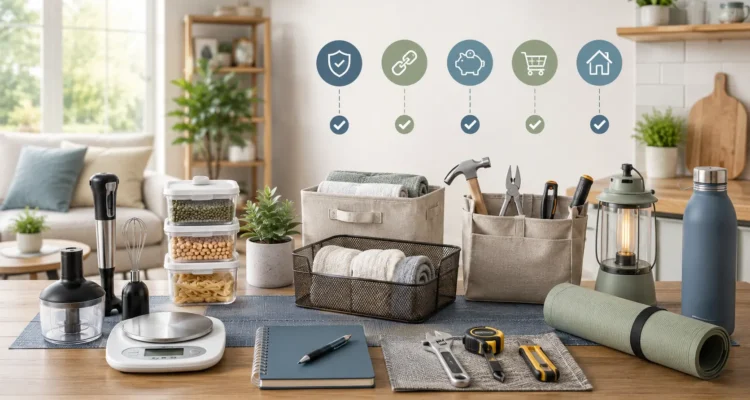
A home and lifestyle buying guide helps you choose products by matching them to your real routine, space, budget, safety needs, and long-term ownership costs. The best purchase is rarely the item with the longest feature list. It is the one that solves a recurring problem, fits comfortably into everyday life, remains easy to maintain, and continues delivering value after the excitement of buying it has faded.
Home and lifestyle purchases cover a wide range of decisions. They include kitchen gadgets, writing tools, cleaning supplies, storage products, small appliances, maintenance equipment, comfort items, and everyday essentials. These products may look unrelated, but the decision process is remarkably consistent. A useful framework can prevent impulse purchases, reduce waste, and help you spend more confidently. This home essentials buying guide also helps readers filter everyday options before comparing specific brands.
This evergreen guide explains that framework in plain English. It also connects you to focused resources for specific products and household tasks. Use it before comparing brands, reading reviews, or responding to a sale. It will help you separate genuine usefulness from attractive marketing. This home and lifestyle buying guide keeps the decision focused on real household needs.
Table of Contents
What Is a Home and Lifestyle Buying Guide?
A home and lifestyle buying guide is a practical system for evaluating products used in the home or during everyday routines. Instead of naming one universal “best” product, it helps a shopper identify which option is best for a particular person, budget, space, and purpose.
The distinction matters because product recommendations are contextual. A compact kitchen tool may be ideal for an apartment but frustrating for a large family. A premium mechanical pencil may be valuable to a designer who writes and sketches daily but unnecessary for someone who only makes an occasional shopping list. A maintenance tool can save money for a homeowner while becoming clutter for a renter whose landlord handles repairs. This home and lifestyle buying guide keeps the recommendation useful beyond short-lived trends.
Good buying advice therefore begins with the user rather than the product. It asks what problem must be solved, how often the item will be used, where it will be stored, who will operate it, and what ownership will require over time. Reviews and specifications become useful only after those questions are answered. The home and lifestyle buying guide framework makes that first comparison easier.
Why a Decision Framework Is Better Than a Trend List
Trend lists become outdated whenever models, prices, or fashions change. A decision framework remains useful because the fundamentals of value change much more slowly. Space, reliability, maintenance, safety, comfort, and total cost are important whether a product was released yesterday or several years ago.
This does not mean current reviews are unnecessary. They are valuable for checking the performance of a particular model. The framework simply tells you what evidence to look for and how much weight to give it. It turns a review from entertainment into decision support.
Seven Smart Shopping Rules for Home and Lifestyle Products
The following seven rules form the core of this home essentials buying guide. Apply them in order. A product that fails an early rule usually does not deserve more research, even if later features look impressive. A practical lifestyle product buying guide should use these rules to connect features with genuine daily needs. A home and lifestyle buying guide should always begin with this practical question.
1. Define the Real Problem Before Comparing Products
Start with a problem statement, not a product name. “I need an air fryer” is already a proposed solution. “Weeknight meals take too long and I want faster cooking with easy cleanup” describes the actual need. The second statement leaves room for several solutions and makes comparison more rational.
Write down what happens now, what outcome you want, and how often the problem occurs. A recurring inconvenience deserves more attention than a rare annoyance. If you cannot explain the problem in one sentence, wait before buying. The urge may have come from advertising rather than a genuine need.
Also consider whether a product you already own can solve the issue. A better storage location, a small replacement part, or a change in routine may remove the need for another purchase. Buying nothing is sometimes the highest-value decision. This home and lifestyle buying guide treats routine fit as a core value signal.
2. Match the Product to Your Actual Routine
Buy for the life you live now, not the lifestyle shown in promotional images. Frequency of use, available time, physical ability, household size, children, pets, and personal habits all affect suitability.
For example, a tool that requires hand washing after every use may work for a careful weekend cook but become irritating in a busy household. A white fabric item may look elegant yet be impractical around pets or young children. A complex device may offer advanced control while creating unnecessary friction for someone who values speed and simplicity.
Imagine using the product on an ordinary rushed day. Consider setup, operation, cleanup, storage, and the possibility of mistakes. If it only feels convenient under ideal conditions, it is probably not convenient enough. The home and lifestyle buying guide approach prevents features from replacing genuine usefulness.
3. Measure Space, Capacity, and Compatibility
Many disappointing household purchases are not defective; they are simply the wrong size. Measure the storage area and the working area before ordering. Include height, width, depth, door clearance, cable reach, ventilation space, and the room required to load or clean the item.
Capacity should reflect normal demand rather than the largest imaginable occasion. Oversized products occupy more space, may consume more energy, and can be harder to clean. Undersized products create repeated work. Choose the capacity that handles typical use comfortably, with a modest margin for busier days.
Compatibility extends beyond dimensions. Check voltage, plug type, replacement parts, refills, accessories, operating systems, water connections, mounting surfaces, and materials that may touch food or skin. Proprietary accessories can lock a low-cost purchase into expensive long-term ownership. A reliable home and lifestyle buying guide also accounts for available storage space.
4. Calculate Total Cost of Ownership
The price at checkout is only the beginning. Total cost of ownership can include delivery, installation, electricity, water, batteries, filters, cleaning supplies, subscriptions, proprietary refills, replacement parts, and eventual disposal.
A more expensive product may be cheaper over several years if it lasts longer, uses standard consumables, and can be repaired. A bargain can become expensive when it needs frequent replacements or forces you to buy costly accessories. Estimate the likely annual running cost and divide the expected ownership cost by the years or uses you expect to receive. The home and lifestyle buying guide comparison also protects against unnecessary repeat purchases.
Energy consumption deserves extra attention for products used frequently. Official efficiency information from programs such as ENERGY STAR can help shoppers compare eligible appliances using consistent criteria. Do not pay for efficiency features that have no meaningful effect on your use, but do include operating cost when the product runs for many hours. This home and lifestyle buying guide uses ownership cost to reveal the better long-term option.
5. Prioritize Reliability, Repairability, and Maintenance
Durability is not the same as heaviness or a premium appearance. Look for simple construction, appropriate materials, replaceable wear parts, clear care instructions, accessible support, and a sensible warranty. Check whether common components can be purchased without replacing the entire product.
Maintenance must fit your willingness and schedule. Ask how often filters need changing, blades need sharpening, batteries need charging, surfaces need conditioning, or internal parts need cleaning. A high-performing product that is difficult to maintain may gradually perform worse or stop being used.
Read negative reviews for patterns rather than isolated complaints. Repeated reports of the same hinge, seal, motor, coating, or software failure are more meaningful than a single angry review. Pay attention to how the manufacturer responds when something goes wrong. The home and lifestyle buying guide method therefore includes upkeep before recommending a purchase.
6. Check Safety, Materials, and Recall History
Safety is a minimum requirement, not an optional feature. Examine certifications relevant to the product category, stable construction, heat protection, child locks, automatic shutoff, food-contact materials, secure cords, and clear instructions. Avoid unknown electrical products that provide no credible manufacturer, warranty, or safety information.
For products sold in the United States, the U.S. Consumer Product Safety Commission recall database is a useful place to check whether a model has been recalled. Other countries maintain their own official recall systems. A recalled product should be handled according to the responsible agency or manufacturer’s instructions.
Materials matter most where a product contacts food, drinking water, skin, children, or high heat. Marketing terms such as “natural,” “green,” or “non-toxic” are not substitutes for specific material disclosure and relevant testing. Look for precise information rather than broad claims. A safety-conscious home and lifestyle buying guide checks evidence before accepting marketing claims.
7. Compare Evidence, Not Feature Counts
A long feature list creates the impression of value, but unused features add cost and complexity. Identify three to five criteria that directly affect your problem, then compare shortlisted products against those criteria.
Use several types of evidence. Manufacturer specifications explain intended capabilities. Independent tests can reveal performance under controlled conditions. Long-term owner reviews identify recurring reliability and maintenance issues. Demonstration videos may clarify size and operation, but sponsored content should be interpreted with its incentives in mind.
Separate facts from preferences. Weight, dimensions, warranty length, power, and included accessories are facts. Whether a handle feels comfortable or an interface feels intuitive may depend on the user. When possible, inspect high-touch products in person or buy from a retailer with a reasonable return policy. This home and lifestyle buying guide gives relevant performance more weight than feature count.
How to Compare Products Without Getting Overwhelmed
Online shopping makes it easy to open dozens of tabs and difficult to reach a decision. A short comparison process prevents research from becoming endless.
Step 1: Set Non-Negotiable Requirements
List requirements that every acceptable option must meet. Examples include maximum dimensions, minimum capacity, safety certification, washable parts, a defined budget, local warranty support, or compatibility with something you already own. Remove any product that fails a non-negotiable requirement.
Step 2: Choose Three Meaningful Differentiators
After basic filtering, products often look similar. Select three factors that meaningfully separate them, such as cleaning effort, noise, durability, accuracy, energy use, or replacement-part availability. Do not let minor cosmetic differences dominate a functional decision. The home and lifestyle buying guide process removes unsuitable options before detailed comparisons begin.
Step 3: Create a Simple Scorecard
Give each criterion a weight based on importance and score each product consistently. A basic five-point scale is enough. The purpose is not mathematical perfection; it is to expose why one option fits better.
- Fit and compatibility: Does it work in your space and with existing systems?
- Performance: Does credible evidence show that it solves the main problem?
- Ownership cost: What will you spend after purchase?
- Ease of use: Can everyone who needs it operate and clean it comfortably?
- Durability and support: Are parts, warranty service, and help available?
Step 4: Use a Cooling-Off Period
For a non-urgent purchase, wait at least a day after choosing a leading option. The pause reduces the influence of countdown timers, limited-stock messages, and excitement. If the product still solves a clear problem after the pause, the decision is more likely to be sound.
Step 5: Record the Reason for Your Choice
Write one sentence explaining why you selected the product. This creates a reference when a competing item goes on sale. It also helps you evaluate the purchase later and improve future decisions. A clear home and lifestyle buying guide keeps the scorecard simple enough to use.
Buying by Home and Lifestyle Category
The seven rules apply broadly, but different product categories require different priorities. This section turns the framework into a practical household product buying guide. This household product buying guide adapts the same framework to the priorities of each category.
Kitchen Tools and Small Appliances
Kitchen products should earn the space they occupy. Prioritize food-safe materials, stable operation, realistic capacity, cleaning access, replacement parts, and functions you will use regularly. Unitaskers can be worthwhile when the task occurs frequently, but multifunction products usually offer better space efficiency. A balanced home and lifestyle buying guide explains trade-offs instead of promising perfection.
Check whether removable components are dishwasher-safe, but also confirm that narrow channels, seals, or blades are accessible. Consider how the product performs with the portion sizes you actually prepare. Our guide to the best kitchen gadgets under $50 applies these principles to affordable tools designed to save time without consuming excessive counter space. This home and lifestyle buying guide recommends a pause whenever a purchase is not urgent.
Writing, School, and Everyday Work Tools
Comfort, consistency, refill availability, and task suitability matter more than novelty. A writing tool used for hours should match grip preference and pressure. A technical drawing tool needs precision and reliable lead control. Standardized refills usually improve long-term value and reduce waste.
The right choice depends on handwriting, drawing, note-taking, or drafting needs. Learn how reusable construction, line consistency, and refill choice affect value in our guide to the benefits of mechanical pencils.
Cleaning and Organization Products
Cleaning products should reduce effort rather than add setup and storage work. Consider surface compatibility, reach, weight when full, drying time, and how easily dirty components can be washed. Avoid buying separate tools for tasks that an existing item handles well. The home and lifestyle buying guide framework can then be reused for similar decisions.
Organization products require accurate measurement and a realistic understanding of what must be stored. Containers do not solve excess possessions by themselves. Organize the items you intend to keep, choose visibility or labeling appropriate to the space, and preserve access to frequently used objects.
Home Maintenance Tools and Supplies
Maintenance purchases should reflect the tasks you are responsible for and can perform safely. Basic inspection, cleaning, tightening, sealing, and filter replacement may prevent larger problems. Specialist electrical, structural, gas, or high-access work may require a qualified professional rather than another tool.
A maintenance schedule often creates more value than expensive equipment. Our quick and easy home maintenance guide explains manageable habits that help identify small issues before they become disruptive repairs. A practical home and lifestyle buying guide adjusts priorities for each product category.
Comfort, Decor, and Lifestyle Accessories
Comfort is personal, so dimensions, texture, temperature, adjustability, and return policies matter. For decor, consider how an item relates to existing colors, lighting, cleaning requirements, and traffic patterns. A beautiful object that blocks movement or demands constant care may reduce everyday satisfaction.
Prefer flexible pieces when your living situation may change. Neutral foundational items can be updated with smaller accessories, reducing the cost of changing style. Durability matters in high-contact areas, while delicate materials may be reasonable in low-traffic spaces.
Smart Home Shopping Tips for Online Purchases
Online listings are convenient but make scale, finish, and quality difficult to judge. These smart home shopping tips reduce uncertainty. These smart home shopping tips make online comparisons clearer without encouraging impulse purchases. This home and lifestyle buying guide favors tools that earn the space they occupy.
- Read the complete dimensions and reproduce the footprint with tape or cardboard.
- Check the model number because reviews may combine several versions on one listing.
- Look at customer photographs for realistic scale and color, while remembering that photos can still vary.
- Read recent reviews because manufacturing quality and included accessories can change.
- Verify who sells the item and who provides the warranty.
- Save the listing, receipt, serial number, and warranty information after purchase.
- Inspect the return window before opening or discarding packaging.
Be cautious with extreme discounts from unfamiliar sellers. Compare the exact model rather than the product name alone. A lower price may reflect an older version, fewer accessories, a different warranty, or an unauthorized seller.
How to Read Product Reviews Critically
A lifestyle product buying guide should help you interpret reviews, not merely repeat their conclusions. Start by checking how a product was tested. A credible review explains the conditions, comparison products, important measurements, and limitations.
Distinguish a first impression from a long-term assessment. Initial reviews can evaluate setup and immediate performance but cannot establish durability. Owner reports covering months or years are more useful for identifying wear, support quality, and recurring maintenance. The home and lifestyle buying guide also considers comfort during repeated everyday use.
Look for agreement across independent sources. No source is perfect, and different testers may prioritize different users. Consistent strengths and weaknesses across multiple sources are more reliable than a single dramatic claim.
Affiliate relationships do not automatically make a review inaccurate, but disclosure and method matter. A useful review explains who should buy the product, who should skip it, and which trade-offs remain. Advice that describes every option as essential provides little help.
When to Pay More—and When Not To
Paying more makes sense when the additional cost improves a feature you will use, reduces a meaningful risk, extends service life, improves repairability, or lowers operating expense. It may also be reasonable for a high-touch product where comfort strongly affects daily use. A trustworthy home and lifestyle buying guide distinguishes verified specifications from personal preference.
Paying more is less sensible when the difference is mainly branding, decorative packaging, unused smart features, or accessories you already own. Entry-level products can be excellent for occasional tasks when they meet basic safety and reliability requirements.
Consider cost per use. A dependable $100 item used 500 times costs less per use than a $30 item used twice. However, projected use must be honest. A premium price cannot create a habit that does not exist. This home and lifestyle buying guide remains useful as the resource library grows.
Current Home and Lifestyle Guides
This hub will grow as new guides are published. The current library covers three different types of decision: affordable kitchen tools, reusable writing equipment, and preventive home upkeep. This home and lifestyle buying guide treats a discount as useful only after suitability is confirmed.
- Best Kitchen Gadgets Under $50 — practical, budget-conscious tools for routine cooking tasks.
- Benefits of Mechanical Pencils — a guide to precision, refillability, comfort, and everyday usefulness.
- Quick and Easy Home Maintenance — simple habits for protecting a home and identifying problems early.
New resources can be added to this list without changing the decision framework. That keeps the pillar evergreen while allowing the category to expand naturally.
Common Home and Lifestyle Buying Mistakes
Buying for an Imagined Future Routine
A purchase should support an existing habit or a specific, realistic change. Buying advanced equipment before establishing the basic routine often creates guilt and clutter. Begin with the minimum viable product and upgrade when actual use reveals a limitation.
Ignoring Storage and Cleanup
Products are often evaluated only while in use. Storage and cleanup may occupy more time. If an item is difficult to reach or restore after use, it will gradually disappear from the routine. The home and lifestyle buying guide checklist continues after checkout through testing and maintenance.
Choosing the Cheapest Initial Price
Low prices are valuable when quality is adequate, but repeated replacement is neither economical nor convenient. Include consumables, maintenance, downtime, and disposal in the comparison.
Trusting a Single Viral Recommendation
A viral product may perform well for the creator’s situation and poorly for yours. Apply your own requirements and seek evidence beyond short demonstrations. Popularity proves attention, not suitability.
Keeping a Product That Fails Early
Test important functions during the return window. Check dimensions, noise, comfort, controls, and cleanup promptly. Do not keep an unsuitable product merely because returning it feels inconvenient.
Post-Purchase Checklist
A good decision continues after checkout. Use this checklist to protect value and safety:
- Inspect the product for damage and confirm the exact model.
- Read safety, setup, care, and warranty instructions.
- Test all important functions before the return period ends.
- Register the warranty if registration provides a genuine benefit.
- Store the receipt, model number, and serial number securely.
- Add recurring maintenance to a calendar.
- Review whether the product solved the original problem after several weeks.
If it does not solve the problem, identify why. The product may be unsuitable, or the original requirement may have been unclear. This short review improves every future purchase.
Frequently Asked Questions
What should I check before buying a home or lifestyle product?
Check the problem it solves, expected frequency of use, dimensions, compatibility, total ownership cost, maintenance, safety, warranty, repair options, and credible performance evidence. These factors provide a more reliable decision than price or feature count alone.
How do I know whether a household product is worth buying?
A household product is worth buying when it solves a recurring problem, fits your actual routine and space, remains affordable over its useful life, and requires maintenance you can realistically perform. It should offer clear value compared with using or repairing something you already own.
Are expensive home products always better?
No. A higher price is worthwhile only when it improves relevant performance, safety, durability, repairability, comfort, or operating cost. Extra styling, branding, and unused features may raise the price without improving value for a particular buyer.
How many reviews should I read before buying?
There is no required number. Read enough independent evidence to understand performance, common failures, maintenance, and who the product suits. A small set of detailed, transparent reviews is more useful than hundreds of ratings with little context.
Should I wait for a sale?
Wait when the purchase is not urgent and the selected model has a predictable discount history. Do not buy an unsuitable product because the discount appears large. A sale creates value only when the item already meets your requirements.
What is the most important home shopping rule?
Define the real problem before comparing products. This prevents marketing from choosing the solution for you and makes every later decision—features, size, price, and brand—easier to evaluate.
Final Thoughts
The purpose of a home and lifestyle buying guide is not to encourage more shopping. It is to improve the quality of each decision. Start with the real problem, match the product to everyday life, measure the space, calculate ownership cost, evaluate maintenance and safety, and compare evidence instead of feature counts.
Specific models will change, but these principles remain dependable. Use the framework whenever you evaluate kitchen tools, writing supplies, maintenance equipment, organization products, comfort items, or other household essentials. Then use the focused guides in this hub when you need category-specific detail. A thoughtful purchase should make daily life simpler long after the sale ends. This home and lifestyle buying guide is designed to support those future updates without losing its practical focus.
