What Is Business Property Insurance? Coverage and Costs
 Kamran Liaquat Ali
- posted on
- No Comment

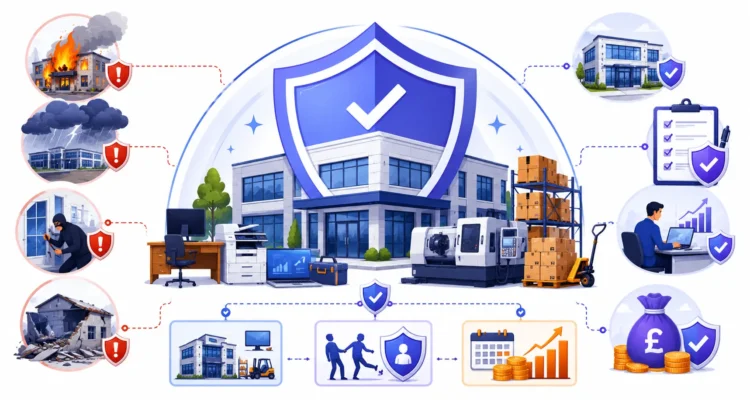
What is business property insurance, and why can it be so important for companies that own buildings, equipment, inventory, furniture, computers, tools, or other physical assets? Business property insurance is designed to help protect specified commercial property against covered loss or damage according to the terms of the policy.
For many businesses, a serious fire, theft, storm, or other covered event can create costs far beyond replacing a single item. Operations may be interrupted, equipment may become unusable, inventory may be destroyed, and the company may need temporary facilities while repairs are completed.
Understanding what is business property insurance means looking at more than just buildings. Depending on the policy, commercial property coverage may protect business contents, machinery, equipment, inventory, furniture, and other insured assets.
This guide explains what is business property insurance, what it may cover, what it may exclude, how business personal property works, the difference between direct and indirect losses, how a Business Owners Policy can bundle coverage, and how companies can evaluate their insurance needs.
For a broader introduction to insurance, liability, claims, and legal protection, visit our complete Insurance and Legal Guide. If you are new to insurance terminology, our What Is Insurance? guide is another useful starting point.
Table of Contents
What Is Business Property Insurance?
What is business property insurance? In simple terms, it is insurance designed to protect certain physical assets owned, leased, or used by a business against specified covered events.
The U.S. Small Business Administration identifies commercial property insurance as coverage for businesses with significant property and physical assets and explains that it protects business property against loss or damage from a range of events.
The answer to what is business property insurance depends on the policy because commercial insurance is not one standardized promise that covers every asset and every cause of loss.
A policy can include protection for:
- Commercial buildings
- Office furniture
- Computers and electronics
- Machinery
- Tools
- Inventory
- Raw materials
- Fixtures
- Other insured business property
Exact protection depends on policy definitions, limits, deductibles, valuation methods, exclusions, covered causes of loss, and other conditions.
How Does Business Property Insurance Work?
Understanding how the policy operates makes the answer to what is business property insurance much easier.
1. The Business Identifies Its Property
The company first determines which assets need protection and what they are worth.
These may include:
- A building owned by the company
- Tenant improvements
- Computers
- Manufacturing equipment
- Furniture
- Stock and inventory
- Tools
- Other physical assets
2. Coverage Is Purchased
The business chooses a commercial property policy or package that fits its operations.
The policy defines:
- Which property is insured
- Which causes of loss are covered
- Coverage limits
- Deductibles
- Valuation provisions
- Exclusions
- Policy conditions
3. A Covered Loss Occurs
If insured property suffers damage from a covered event, the business can report the loss to its insurer.
4. The Claim Is Evaluated
The insurer reviews the circumstances and policy terms to determine whether coverage applies and what amount may be payable.
This is an essential part of understanding what is business property insurance: owning a policy does not mean every property loss will automatically qualify for reimbursement.
9 Powerful Facts About Business Property Insurance
These nine facts provide a practical explanation of what is business property insurance and what business owners should understand before choosing coverage.
Fact 1: Business Property Insurance Covers More Than Buildings
A common misunderstanding about what is business property insurance is that it only protects commercial buildings.
Commercial property coverage may also protect business contents such as:
- Computers
- Furniture
- Equipment
- Inventory
- Machinery
- Tools
A company that leases its premises can therefore still have substantial property risks even if it does not own the building.
Fact 2: Property Insurance and Liability Insurance Are Different
This is one of the most important corrections to the old article.
Business property insurance primarily protects insured business property. Liability insurance addresses certain claims involving injury or damage for which the business may be legally responsible.
They can be bundled together in a Business Owners Policy, but they are not the same coverage.
The NAIC explains that commercial general liability insurance covers categories such as bodily injury and damage to other people’s property.
For a complete explanation, read our Liability Insurance and Its Types guide.
Fact 3: A Business Owners Policy Can Bundle Several Coverages
When researching what is business property insurance, you will often encounter the term Business Owners Policy, or BOP.
Triple-I explains that a BOP can bundle property insurance, liability protection, and business interruption coverage into one package for many small and mid-sized businesses.
A BOP can simplify business insurance, but businesses should still review the individual coverages, limits, and exclusions included in the package.
Fact 4: Business Income Coverage Is Different From Property Damage
Another important part of understanding what is business property insurance is distinguishing physical damage from lost income.
Suppose a fire damages a shop.
The physical repairs are one issue. The revenue lost while the shop cannot operate is another.
Business interruption or business income insurance is designed to address certain financial losses when operations are suspended because of a covered physical loss.
The NAIC states that business interruption coverage can help replace lost income and cover certain fixed expenses while a business is closed due to covered physical property damage.
Fact 5: Flood Damage May Require Separate Coverage
A complete answer to what is business property insurance must explain that standard commercial property policies do not necessarily cover every natural disaster.
For example, Triple-I states that flood damage is typically not covered under a standard commercial property policy, Business Owners Policy, or Commercial Package Policy.
Businesses in flood-prone areas should evaluate whether separate flood insurance is appropriate.
Fact 6: Replacement Cost and Actual Cash Value Can Produce Different Results
Property valuation can significantly affect a claim.
A policy may value insured property using different approaches, depending on the contract.
Two commonly discussed concepts are:
- Replacement cost — generally focuses on replacing damaged property with comparable property without depreciation, subject to policy terms.
- Actual cash value — generally considers depreciation when valuing damaged property.
When learning what is business property insurance, business owners should pay close attention to how their assets will be valued after a loss.
Fact 7: Businesses Should Keep Property Values Updated
Equipment prices, construction costs, inventory levels, and business operations can change.
If coverage limits remain unchanged for years, the policy may no longer reflect the current value of the business’s assets.
The SBA advises businesses to accurately value property and real estate associated with their operations.
Fact 8: Home-Based Businesses Can Still Need Commercial Coverage
Another misconception about what is business property insurance is that only companies operating from commercial buildings need it.
A home-based business may own:
- Computers
- Professional equipment
- Inventory
- Tools
- Specialized furniture
Triple-I notes that a Business Owners Policy can provide broader property, equipment, income, extra-expense, and liability protection for qualifying home-based businesses.
Fact 9: Cyber Insurance Is Not the Same as Business Property Insurance
The old article listed data breach insurance and cyber liability insurance as types of business property insurance. That classification is misleading.
Cyber insurance addresses digital and cyber-related risks, while business property insurance primarily concerns physical commercial assets.
A business may need both, but one should not automatically be treated as a substitute for the other.
What Does Business Property Insurance Cover?
Business owners asking what is business property insurance usually want to know which assets can actually be protected.
Coverage varies, but common categories may include:
Commercial Buildings
If the business owns its building, commercial property insurance may cover the insured structure against specified causes of loss.
This can potentially include components such as:
- Walls
- Roof
- Permanent fixtures
- Built-in systems
- Other insured structural components
Business Personal Property
Business personal property generally refers to movable assets used in company operations.
Examples can include:
- Desks
- Chairs
- Computers
- Printers
- Tools
- Machinery
- Office equipment
Understanding business personal property is a major part of understanding what is business property insurance.
Inventory
Retailers, manufacturers, wholesalers, and other companies may hold substantial inventory.
A covered event that damages stock can create an immediate financial loss and can also affect future sales.
Machinery and Equipment
Manufacturing, construction, repair, healthcare, and many other industries depend on expensive equipment.
Business property coverage can potentially help protect insured machinery and equipment against specified causes of loss.
Furniture and Fixtures
Office furniture, shelving, displays, and other contents can also represent significant replacement costs.
What Is Business Personal Property?
People researching what is business property insurance often see the phrase business personal property.
Business personal property generally means movable property owned or used by a business rather than the actual building itself.
For example:
- A retailer’s shelves and stock
- An accountant’s computers and desks
- A contractor’s tools
- A manufacturer’s equipment
- A restaurant’s furniture and certain equipment
Businesses should create and maintain an inventory of important assets, including purchase information, serial numbers, photographs, and replacement values where appropriate.
What Is a Business Owners Policy (BOP)?
A Business Owners Policy is closely connected to the question what is business property insurance because many smaller companies buy property coverage through a package rather than as a completely standalone policy.
Triple-I explains that smaller and mid-sized businesses commonly purchase a BOP containing property insurance for company buildings and contents plus liability protection.
A BOP may commonly combine:
- Commercial property insurance
- General liability insurance
- Business income or interruption coverage
- Other optional or included coverages
However, a BOP is not suitable for every business.
Companies with specialized operations, unusual risks, large property values, or complex liability exposures may require additional or different commercial policies.
Direct Losses in Business Property Insurance
Direct loss is another concept that helps explain what is business property insurance.
A direct physical loss generally refers to physical damage to insured property caused by a covered event.
For example, if a covered fire damages:
- A commercial building
- Machinery
- Furniture
- Inventory
the physical damage may represent the direct property loss.
However, the old article incorrectly suggested that direct losses are automatically covered without exclusions or limitations.
That is not accurate.
Whether a direct loss is covered depends on:
- The cause of loss
- The insured property
- The coverage form
- Policy limits
- Deductibles
- Exclusions
- Other policy conditions
This distinction is essential when understanding what is business property insurance.
Indirect and Consequential Business Losses
A property incident can also create losses beyond the physical damage itself.
Imagine a restaurant suffers a covered fire.
The direct loss may involve damage to the building and equipment.
But if the restaurant remains closed for several months, it can also lose revenue and continue facing expenses.
These financial effects are why business income or interruption coverage exists.
The NAIC explains that business interruption insurance can protect against monetary losses during periods of suspended operations when a covered physical event damages the property.
When researching what is business property insurance, do not assume standard property coverage automatically pays every indirect financial loss associated with a shutdown.
Business Property Insurance vs Business Interruption Insurance
The distinction between these two policies is important.
Business property insurance generally focuses on physical assets.
Business interruption insurance focuses on specified income and operating losses resulting from covered disruptions.
For example:
- Damaged machinery = property issue
- Lost revenue because machinery cannot operate = potentially business income issue
A BOP may bundle both types of protection, which is one reason the policies are sometimes confused.
Business Property Insurance vs General Liability Insurance
Understanding the difference is another essential part of learning what is business property insurance.
Suppose a customer slips inside a store and suffers an injury.
The main issue is not damage to the company’s property. It is potential legal liability to another person.
That type of situation is generally associated with liability insurance rather than commercial property coverage.
The NAIC describes commercial general liability coverage as protection related to risks such as bodily injury and damage to others’ property.
Read our Liability Insurance guide for a deeper explanation.
Business Property Insurance vs Cyber Insurance
Physical property and digital risks are different exposures.
A commercial property policy may insure physical computers and servers against specified physical damage.
That does not mean the same policy automatically covers:
- Data breaches
- Cyber extortion
- Privacy notifications
- Network attacks
- Data restoration after cyber incidents
Companies evaluating what is business property insurance should therefore consider whether separate cyber coverage is needed for their digital exposures.
What Events Can Business Property Insurance Cover?
There is no universal list of causes covered by every commercial property policy.
Depending on the policy, protection may apply to specified events such as:
- Fire
- Smoke
- Theft
- Vandalism
- Certain storms
- Other insured causes of physical loss
The SBA’s business-insurance guidance describes commercial property insurance as protection against loss and damage from events including fire, smoke, wind, hail, and vandalism, depending on the policy.
Again, the answer to what is business property insurance always comes back to actual policy wording.
What Business Property Insurance May Not Cover
A good explanation of what is business property insurance must discuss exclusions as well as benefits.
Standard policies may exclude or limit certain losses.
Potential examples include:
- Flood
- Earth movement
- Ordinary wear and tear
- Certain equipment breakdowns
- Intentional damage
- Cyber events
- Excluded property
- Losses exceeding coverage limits
Exact exclusions differ significantly by insurer and policy.
Triple-I notes, for example, that flood damage is typically excluded from standard commercial property and BOP coverage.
Who Needs Business Property Insurance?
The answer to what is business property insurance becomes particularly relevant for any company that could suffer a meaningful financial loss if its physical assets were damaged or destroyed.
Businesses that may benefit from evaluating commercial property insurance include:
- Retail stores
- Restaurants
- Manufacturers
- Warehouses
- Professional offices
- Construction companies
- Repair shops
- Technology businesses
- Home-based businesses
- Service companies with valuable equipment
A company does not need to own a building to have substantial property exposure.
A tenant can still own tens or hundreds of thousands of dollars in inventory, machinery, furniture, computers, and improvements.
Do Home-Based Businesses Need Property Insurance?
A home-based entrepreneur asking what is business property insurance should not automatically assume a homeowners policy fully protects business property.
Business equipment and inventory can require dedicated commercial protection depending on their value and use.
Triple-I discusses several insurance options for home-based businesses, including BOP coverage for business property, equipment, income, extra expense, and liability.
If your company operates from home, review both your homeowners and business insurance rather than assuming one policy covers everything.
How Much Business Property Insurance Do You Need?
There is no universal limit suitable for every company.
To decide how much coverage may be appropriate, businesses should inventory their major physical assets.
Consider:
- Building reconstruction costs
- Machinery replacement
- Equipment values
- Furniture
- Electronics
- Inventory levels
- Tenant improvements
- Seasonal increases in stock
Understanding what is business property insurance also means understanding that insufficient policy limits can leave a business responsible for a larger portion of a significant loss.
What Affects the Cost of Business Property Insurance?
The cost of commercial property insurance varies based on the characteristics of the business and property.
Potential factors can include:
- Location
- Building construction
- Property value
- Business type
- Inventory value
- Fire protection
- Security systems
- Claims history
- Coverage limits
- Deductible
- Types of hazards present
Different insurers assess risk differently, so businesses may receive different quotations for similar coverage.
How to Choose Business Property Insurance
Once you understand what is business property insurance, the next step is choosing coverage that matches the company’s actual risks.
1. Create an Asset Inventory
List important property and estimate realistic replacement values.
2. Identify Major Risks
Consider the types of events that could significantly affect the business.
3. Review Coverage Limits
Make sure policy limits make sense relative to the assets at risk.
4. Compare Valuation Methods
Understand whether property will be valued using replacement cost, actual cash value, or another method.
5. Check the Deductible
A larger deductible may lower premiums but increases the amount the business may need to absorb after a covered loss.
6. Review Exclusions
Do not focus only on the list of benefits.
7. Consider Business Income Coverage
If a major property loss could stop operations, business interruption protection may be important.
8. Consider Liability Separately
Property coverage does not automatically replace liability insurance.
9. Review Coverage Regularly
Growing businesses frequently add equipment, inventory, employees, locations, and other assets.
How Does a Business Property Insurance Claim Work?
The claims process is another important aspect of what is business property insurance.
Procedures vary by insurer and policy, but businesses may generally need to:
- Take reasonable steps to protect people and prevent additional damage.
- Notify the insurer promptly.
- Document the damaged property.
- Prepare an inventory of affected assets.
- Keep receipts and repair estimates.
- Cooperate with inspections or claims investigations.
- Review the insurer’s coverage decision.
Useful documentation can include:
- Photographs
- Purchase receipts
- Serial numbers
- Inventory records
- Repair estimates
- Accounting records
- Other evidence of property value
Why Business Property Insurance Matters for Risk Management
The broader answer to what is business property insurance is that it forms one part of a company’s financial risk-management strategy.
Insurance does not prevent a fire, theft, storm, or other loss.
Instead, it can help reduce the financial consequences of specified events.
A well-designed business insurance program may combine:
- Property coverage
- General liability
- Business income insurance
- Workers’ compensation where applicable
- Commercial auto
- Cyber coverage
- Professional liability
- Other specialized policies
The right combination depends on the business.
Business Property Insurance and the Wider Insurance & Legal Framework
Business property risks often connect with other financial and legal issues.
A fire, for example, can involve physical property damage, interrupted revenue, employee issues, contracts, customer obligations, and liability questions.
That is why what is business property insurance should be understood as part of a larger insurance strategy rather than as an isolated product.
Our Insurance and Legal Guide is the main pillar resource connecting property insurance, liability, claims, legal protection, and asset protection.
Businesses involved in international transportation can also explore our What Is Marine Insurance? guide for cargo and maritime risks.
Frequently Asked Questions About What Is Business Property Insurance
What is business property insurance in simple words?
What is business property insurance in simple terms? It is coverage designed to protect specified physical business assets against covered loss or damage according to an insurance policy.
What does business property insurance cover?
Depending on the policy, coverage can include commercial buildings, equipment, furniture, inventory, machinery, tools, and other insured business property.
Does business property insurance include liability?
Property insurance and liability insurance are different coverages. However, both may be packaged together in a Business Owners Policy.
What is a Business Owners Policy?
A BOP is a package commonly designed for eligible small and mid-sized businesses. It can combine property, liability, and business income coverage.
Does business property insurance cover lost income?
Property insurance primarily addresses physical property. Lost income from a covered shutdown may require business income or interruption coverage, although that protection may be included in a BOP or other package.
Does commercial property insurance cover floods?
Standard commercial property and BOP policies typically do not cover flood damage, so separate flood coverage may be needed.
Does business property insurance cover computers?
Computers may be covered as insured business personal property, depending on the policy, limits, location, and cause of loss.
Does business property insurance cover inventory?
Inventory can often be included in commercial property coverage, subject to policy definitions, limits, and exclusions.
Do businesses that rent premises need property insurance?
Potentially yes. Even if a business does not own the building, it may own expensive furniture, inventory, computers, tools, machinery, or improvements.
Does a home-based business need property insurance?
It may. Homeowners coverage may not provide enough protection for commercial assets, and dedicated business coverage can be appropriate depending on the nature and value of the business property.
Is cyber insurance part of business property insurance?
Not generally. Cyber insurance addresses digital risks, while commercial property insurance primarily protects physical business assets. A company may need both.
How much business property insurance do I need?
The amount depends on the value of buildings, equipment, inventory, furniture, improvements, and other insured assets. Businesses should maintain updated property valuations and choose limits that reflect their exposure.
Why should businesses understand what is business property insurance?
Understanding what is business property insurance helps owners identify physical asset risks, recognize coverage gaps, choose suitable limits, and distinguish property protection from liability, cyber, and business income insurance.
Explore More Insurance & Legal Resources
This guide to what is business property insurance is part of our wider Insurance & Legal content cluster.
- Insurance and Legal Guide — our main pillar for insurance, claims, liability, and legal protection.
- What Is Insurance? — learn how policies, premiums, deductibles, and claims work.
- Liability Insurance and Its Types — understand protection against certain third-party liabilities.
- What Is Marine Insurance? — explore cargo, vessel, and maritime risks.
Final Thoughts
So, what is business property insurance? It is a form of commercial insurance designed to protect specified physical business assets against covered loss or damage.
A proper understanding of what is business property insurance requires looking beyond the building itself. Equipment, inventory, machinery, furniture, computers, tools, and other business personal property can all represent significant financial exposure.
It is equally important to distinguish what is business property insurance from other coverages. Liability insurance addresses different risks. Business interruption insurance can protect against certain lost income. Cyber insurance deals with digital exposures. A BOP may combine several of these protections, but businesses should still understand what each coverage actually does.
Before purchasing coverage, create an accurate inventory of business assets, understand replacement values, review limits and deductibles, examine exclusions, and consider how long the business could operate after a major property loss.
As the company grows, review coverage regularly. New equipment, larger inventories, renovations, additional locations, and changing business operations can all affect the amount of protection required.
For the wider picture of how business property coverage connects with liability, insurance claims, and legal protection, continue with our complete Insurance and Legal Guide.
This article is provided for general educational purposes only and does not constitute insurance, legal, or financial advice. Commercial insurance policies, coverage terms, exclusions, deductibles, limits, and legal requirements vary by insurer, business, and jurisdiction. Review actual policy documents and obtain qualified professional advice for your specific business.
