What Is Marine Insurance? 7 Powerful Coverage Facts
 Kamran Liaquat Ali
- posted on
- No Comment

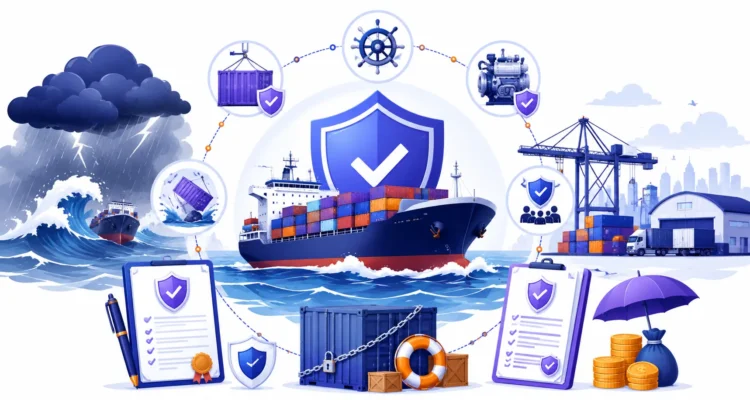
What is marine insurance, and why is it important for shipping companies, importers, exporters, vessel owners, cargo businesses, and international trade? Marine insurance is a specialized form of insurance designed to provide financial protection against specified risks associated with ships, cargo, maritime transportation, terminals, and related commercial activities.
When businesses first ask what is marine insurance, they often assume it simply means insurance for ships. In reality, marine insurance can be much broader. Depending on the policy, it may protect cargo, vessels, machinery, transportation interests, and certain marine liabilities.
Understanding what is marine insurance is particularly important because international transportation involves risks that ordinary business property insurance may not fully address. Goods can be damaged during transportation, vessels can suffer physical damage, cargo may be lost, and maritime businesses can face liability arising from their operations.
This guide explains what is marine insurance in simple terms, including its major types, benefits, coverage, exclusions, principles, claims process, legal background, and practical considerations for businesses involved in maritime trade.
If you are new to insurance in general, first explore our What Is Insurance? guide. You can also visit our complete Insurance and Legal Guide to understand how marine insurance fits into the wider framework of insurance, liability, asset protection, claims, and legal issues.
Table of Contents
What Is Marine Insurance?
What is marine insurance? In simple terms, it is insurance designed to protect specified financial interests connected with maritime transportation and related activities.
The answer to what is marine insurance depends partly on the particular policy being discussed because marine insurance is not a single universal product.
Depending on the coverage purchased, marine insurance can relate to:
- Ships and vessels
- Cargo being transported
- Hull and vessel machinery
- Marine-related liabilities
- Shipping and freight interests
- Port and terminal operations in certain situations
- Goods temporarily stored during insured transportation
The Insurance Information Institute’s marine insurance guidance discusses major areas including cargo insurance, hull and machinery insurance, and marine liability insurance.
Therefore, when explaining what is marine insurance, it is important to avoid saying that every maritime risk is automatically covered. The policy wording ultimately determines what protection exists.
How Does Marine Insurance Work?
Understanding how coverage operates makes the meaning of what is marine insurance much clearer.
The exact process differs between insurers and policies, but marine insurance generally follows the same basic risk-transfer concept used in other forms of insurance.
1. The Marine Risk Is Identified
The first step is identifying what requires protection. This might be cargo, a vessel, vessel machinery, a maritime liability, or another insurable interest associated with transportation.
2. Suitable Coverage Is Selected
When evaluating what is marine insurance for a particular business, the policy should match the actual exposure.
The insurance contract can specify:
- The property or financial interest insured
- The risks covered
- The geographical area
- The policy period or voyage
- Coverage limits
- Deductibles
- Exclusions
- Conditions that must be followed
3. The Policyholder Pays a Premium
The insured pays the insurer for coverage. The premium can depend on the vessel, cargo, route, value, type of goods, risk characteristics, insurance limits, claims history, and other underwriting considerations.
4. A Potentially Covered Loss Occurs
If an event happens that may be covered by the policy, the insured can notify the insurer and begin the claims process.
5. The Claim Is Assessed
The insurer reviews the facts, documents, cause of loss, policy wording, limits, deductible, and exclusions before deciding whether payment is due.
This process is an important part of understanding what is marine insurance because simply suffering a maritime loss does not automatically mean the insurer must pay it.
7 Powerful Facts About Marine Insurance
These seven facts provide a practical answer for anyone researching what is marine insurance and how it protects maritime interests.
Fact 1: Marine Insurance Is Not Only for Ships
A common misunderstanding about what is marine insurance is that it applies only to vessels.
Marine insurance can also protect cargo and certain marine liabilities. An importer, for example, may need marine cargo coverage even though that business does not own or operate the vessel transporting its goods.
Fact 2: Cargo Insurance and Hull Insurance Are Different
Another important distinction when learning what is marine insurance is the difference between protecting cargo and protecting a vessel.
Cargo insurance focuses primarily on goods being transported. Hull and machinery insurance focuses on physical interests associated with the vessel and its equipment.
Fact 3: Marine Liability Can Be a Separate Exposure
Some businesses face potential legal liability arising from maritime operations.
Marine liability products can address specified liability risks according to the individual policy.
To understand liability insurance more broadly, read our Liability Insurance and Its Types guide.
Fact 4: Marine Insurance Does Not Cover Everything
A correct explanation of what is marine insurance must include its limitations.
Coverage may depend on:
- The cause of the loss
- The insured property
- The route or territory
- The type of cargo
- The policy limits
- The deductible
- Policy exclusions
- Compliance with policy conditions
Fact 5: Marine Insurance Supports International Trade
Understanding what is marine insurance is especially useful for importers and exporters because international shipments can represent significant financial value while goods are moving between countries.
A substantial uninsured cargo loss can affect cash flow, inventory availability, supply commitments, and profitability.
Fact 6: Marine Insurance Has a Long Legal History
The legal history also helps explain what is marine insurance. In the United Kingdom, a historically important statute is the Marine Insurance Act 1906.
The previous version of this article incorrectly referred to a “Marine Insurance Act 1963.” The relevant UK statute is the Marine Insurance Act 1906.
Fact 7: Documentation Can Be Critical
One practical lesson about what is marine insurance is that claims can involve substantial documentation.
Invoices, bills of lading, shipping records, photographs, surveys, repair estimates, packing information, and correspondence may all become relevant depending on the nature of the loss.
What Is Marine Insurance Cargo Coverage?
For many importers and exporters asking what is marine insurance, cargo protection is the most relevant category.
Marine cargo insurance is designed to provide protection for insured goods against specified losses while those goods are being transported according to the policy.
Potential users of cargo insurance include:
- Importers
- Exporters
- Manufacturers
- Wholesalers
- Retail businesses
- Commodity traders
- Other companies shipping valuable goods
When researching what is marine insurance for cargo, businesses should consider more than the value of the shipment.
The type of goods, route, packing, storage arrangements, transportation methods, and terms of the policy can all affect the risk.
What Is Hull and Machinery Insurance?
Hull and machinery coverage is another major part of understanding what is marine insurance.
Where cargo insurance protects goods, hull and machinery insurance is designed around physical interests in the insured vessel.
Depending on the contract, coverage can apply to:
- The hull
- Machinery
- Mechanical systems
- Equipment
- Other insured vessel components
This means a ship owner asking what is marine insurance has very different needs from a business that merely owns goods being carried by someone else’s vessel.
What Is Marine Liability Insurance?
Liability is another important part of the answer to what is marine insurance.
Marine businesses may face claims involving bodily injury, property damage, operational responsibilities, contractual obligations, or other liabilities depending on their activities.
Specialized marine liability products may be relevant to organizations such as:
- Terminal operators
- Ship repair businesses
- Marine contractors
- Boat businesses
- Shipbuilders
- Other maritime operators
As always, exact protection depends on the individual insurance contract.
What Is Inland Marine Insurance?
People researching what is marine insurance often encounter the term “inland marine insurance,” which can create confusion.
Inland marine insurance is generally different from traditional ocean marine insurance.
The Insurance Information Institute’s guide to inland marine insurance explains coverage associated with movable property, equipment, and goods in transit over land or temporarily located away from their usual premises.
Therefore, when studying what is marine insurance, distinguish between traditional marine shipping exposure and inland marine products.
What Does Marine Insurance Cover?
Another common question after what is marine insurance is: what exactly does it cover?
There is no single universal answer because marine insurance policies differ.
Depending on the contract, potential covered risks may involve:
- Specified vessel damage
- Cargo loss
- Cargo damage
- Certain collisions
- Specified storm-related events
- Certain theft losses
- Specified marine liabilities
- Other insured maritime risks
The most important lesson when understanding what is marine insurance is that the policy controls the coverage—not a generic description found online.
What Does Marine Insurance Not Cover?
A complete answer to what is marine insurance should explain exclusions as clearly as benefits.
Possible exclusions or limitations can involve:
- Ordinary wear and tear
- Excluded causes of loss
- Certain delay-related losses
- Inadequate or inappropriate packing
- Intentional misconduct
- Uninsured routes
- Uninsured types of cargo
- Certain war or political risks unless specifically covered
- Losses exceeding applicable policy limits
These examples are not universal. Anyone asking what is marine insurance for a real shipment should review the specific policy wording rather than assume a standard exclusion list applies.
Why Is Marine Insurance Important?
Knowing what is marine insurance is useful, but businesses also need to understand why the coverage can matter.
It Helps Manage Financial Loss
A large vessel or valuable cargo shipment can represent substantial financial exposure.
Marine insurance can transfer certain specified risks from the insured to an insurer.
It Protects Cargo Investments
Importers and exporters may have significant capital tied up in goods while those goods are moving through international supply chains.
For these companies, understanding what is marine insurance can form an important part of financial risk planning.
It Can Protect Valuable Vessels
Commercial vessels can represent major capital assets. Physical damage to a vessel may create considerable repair expenses and operational disruption.
It Can Support Business Continuity
Marine insurance cannot prevent a storm, accident, or cargo loss, but appropriate insurance can help manage the financial effects of a covered incident.
It Can Form Part of Contractual Risk Management
Insurance requirements can also arise through financing, shipping contracts, trade arrangements, or other commercial agreements.
What Is Marine Insurance Under UK Law?
For readers asking what is marine insurance from a UK legal perspective, the Marine Insurance Act 1906 is historically important.
The Act was enacted to codify the law relating to marine insurance.
It defines a contract of marine insurance around indemnification against marine losses according to the agreement between the parties.
You can read the legislation directly on the official UK legislation website.
However, understanding what is marine insurance under modern English law should not rely exclusively on a statute enacted in 1906. Insurance law has evolved through later legislation and legal developments.
Commercial organizations dealing with high-value or complicated marine risks should obtain appropriately qualified professional advice when legal interpretation matters.
Principles Associated With Marine Insurance
The traditional principles are another important area when learning what is marine insurance.
Insurable Interest
The insured should have an appropriate interest in the subject matter or financial risk being insured.
In practical terms, the person or business should have a genuine relationship to the potential financial loss.
Indemnity
Marine insurance is traditionally associated with indemnity. The general purpose is to compensate the insured for a covered loss according to the contract, not to create an opportunity to profit from the event.
Proximate Cause
When several events contribute to damage, identifying the effective cause of the insured loss can be important when determining whether policy coverage applies.
Subrogation
After paying certain covered claims, an insurer may acquire rights to seek recovery from a responsible third party where permitted.
Fair Presentation and Disclosure
Commercial insurance depends on accurate information about the risk.
For a business researching what is marine insurance, supplying correct information about cargo, values, routes, operations, and other material details is extremely important.
How Does a Marine Insurance Claim Work?
Understanding the claim process is essential when studying what is marine insurance.
The exact procedure depends on the insurer and policy, but the process may broadly involve the following steps.
Step 1: Notify the Insurer
The insured should comply with applicable notification requirements after becoming aware of a possible insured loss.
Step 2: Prevent Further Loss Where Reasonable
Depending on the circumstances, reasonable steps may need to be taken to protect cargo or property from additional damage.
Step 3: Gather Evidence
Documents potentially relevant to a marine claim include:
- The marine insurance policy
- Commercial invoices
- Bills of lading
- Packing lists
- Shipping documents
- Photographs
- Survey reports
- Repair estimates
- Carrier correspondence
- Incident reports
Step 4: Survey or Investigation
The insurer may investigate the event or appoint specialists to examine the damage and determine its cause.
Step 5: Coverage Is Determined
The insurer then compares the facts with the policy to determine whether the claim falls within coverage and how much may be payable.
This is why anyone learning what is marine insurance should also understand the importance of accurate shipping and claim documentation.
Who Needs Marine Insurance?
One practical way to understand what is marine insurance is to look at the businesses most likely to need it.
Potential users include:
- Ship owners
- Importers
- Exporters
- Cargo owners
- Manufacturers
- Freight businesses
- Logistics companies
- Terminal operators
- Marine contractors
- Other businesses involved in maritime trade
Not every organization needs every type of marine policy.
An importer asking what is marine insurance may primarily need cargo coverage, while a ship owner may need to focus on hull, machinery, and liability exposures.
How to Choose Marine Insurance
Understanding what is marine insurance should help a business ask better questions before buying coverage.
Consider the following:
- What exactly requires protection? Is it cargo, a vessel, machinery, liability, or another maritime interest?
- What is the financial value at risk? Make sure coverage limits reflect realistic exposure.
- Where will the vessel or cargo travel? Geographic limitations can matter.
- What perils are covered? Read the policy rather than assuming.
- What exclusions apply? Understand significant gaps before purchasing the policy.
- What deductible will apply? Know the amount of risk retained by the insured.
- Does the cargo have unusual characteristics? High-value, fragile, hazardous, or specialized cargo can require different considerations.
- Does the business face marine liability? Cargo protection alone may not address liability risks.
A business that understands what is marine insurance should compare actual coverage and exclusions rather than simply purchasing the lowest-priced policy.
Where Can You Buy Marine Insurance?
After learning what is marine insurance, businesses may arrange suitable coverage through different channels depending on the country and type of risk.
Insurance Companies
Some insurers offer marine insurance directly or through authorized agents.
Marine Insurance Brokers
Specialist marine brokers can be particularly useful when cargo, vessels, routes, liabilities, or commercial arrangements are complex.
Commercial Insurance Brokers
A general commercial broker may provide marine products directly or work with specialist insurance markets.
Do not judge a provider only by premium. Consider experience, policy wording, claims support, regulatory status, insurer financial strength, and suitability for the risk.
Marine Insurance vs Business Property Insurance
A frequent question among people researching what is marine insurance is whether ordinary business property insurance already provides the same protection.
The two products can address different risks.
Business property insurance may protect insured commercial property at specified premises, while marine insurance can address cargo, vessels, transportation, or maritime risks.
Businesses that own valuable equipment and inventory should also read our Business Property Insurance guide.
A company involved in international shipping may need to consider both business property insurance and marine coverage rather than assuming one automatically replaces the other.
Marine Insurance vs Travel Insurance
Although both can relate to journeys, they serve fundamentally different purposes.
Travel insurance generally focuses on risks faced by travelers, such as certain medical emergencies, trip disruptions, or baggage issues depending on the policy.
Marine insurance primarily relates to maritime property, cargo, vessels, and related commercial risks.
Our Travel Insurance guide explains travel-focused protection in greater detail.
This comparison is useful because people asking what is marine insurance should not confuse commercial cargo protection with personal travel coverage.
Marine Insurance and Liability Protection
Another reason to understand what is marine insurance is that maritime losses can involve more than physical property damage.
A serious incident may raise questions about:
- Who caused the damage
- Who owns the cargo
- Which party had responsibility during transit
- Whether a carrier is legally responsible
- Whether another party can be pursued for recovery
- Which insurance contract applies
These issues explain why marine insurance belongs within our broader Insurance and Legal Guide.
Common Marine Insurance Mistakes
A business can understand what is marine insurance and still make poor coverage decisions.
Choosing Coverage Only by Price
A cheaper policy can contain different limits, exclusions, deductibles, or scope of protection.
Assuming Every Maritime Event Is Covered
A marine insurance policy only provides the protection stated in its terms.
Providing Inaccurate Risk Information
Incorrect information about cargo, values, routes, vessels, or operations can create serious problems.
Using Inadequate Coverage Limits
If the amount of insurance does not reflect the realistic financial exposure, a large loss may leave the business insufficiently protected.
Ignoring Documentation
Shipping and cargo records can become critical during a claim.
Not Reviewing Coverage as the Business Changes
A company may change shipping routes, cargo types, suppliers, vessels, markets, or values over time.
Therefore, businesses asking what is marine insurance should treat insurance as an ongoing risk-management decision rather than a one-time purchase.
Frequently Asked Questions About What Is Marine Insurance
What is marine insurance in simple words?
What is marine insurance in simple terms? It is insurance designed to provide financial protection against specified risks involving ships, cargo, maritime transportation, and related activities according to the policy.
What are the main types of marine insurance?
Major categories include cargo insurance, hull and machinery insurance, and marine liability insurance. Other specialist forms of coverage can also exist.
What is marine insurance used for?
What is marine insurance used for depends on the insured risk. It can help protect cargo owners, vessel owners, and maritime businesses against specified financial losses.
Does marine insurance cover cargo?
Marine cargo insurance can protect insured goods against specified risks during transportation according to policy terms.
Does marine insurance cover vessels?
Hull and machinery insurance can provide specified protection for vessels, their machinery, and related equipment.
Does marine insurance cover theft?
Some policies may cover certain theft losses, but coverage depends on the contract, circumstances, exclusions, and conditions.
What is the Marine Insurance Act?
For the UK, the historically important legislation is the Marine Insurance Act 1906. The previous reference to a Marine Insurance Act 1963 was incorrect.
What is marine insurance cargo coverage?
What is marine insurance cargo coverage? It is protection designed around insured goods while they are moving through the transportation process, subject to the terms of the policy.
Is marine insurance compulsory?
Whether particular marine insurance is legally or contractually required depends on the jurisdiction, activity, financing arrangement, and commercial contract. Businesses should verify requirements relevant to their specific situation.
Is marine insurance only for large businesses?
No. The need for marine insurance depends on exposure, not simply company size. A smaller importer with a valuable international shipment can also face significant financial risk.
What is the difference between cargo and hull insurance?
Cargo insurance protects insured goods, whereas hull and machinery insurance is designed around the insured vessel and its machinery or equipment.
What is the difference between marine and inland marine insurance?
Traditional marine insurance is closely associated with maritime and overseas transportation risks. Inland marine insurance commonly relates to movable property or goods transported over land or temporarily stored away from their normal premises.
How do I choose marine insurance?
Identify what needs protection, understand its value, assess transportation routes and risks, compare limits and deductibles, read exclusions, and consider specialist advice for complex exposures.
Why should businesses understand what is marine insurance?
Businesses should understand what is marine insurance because international transportation can expose cargo, vessels, and commercial operations to potentially significant financial losses.
Final Thoughts
So, what is marine insurance? It is a specialized form of insurance used to manage specified financial risks associated with ships, cargo, maritime transportation, and related commercial activities.
A proper understanding of what is marine insurance requires recognizing that cargo insurance, hull and machinery insurance, and marine liability insurance serve different purposes.
It also requires understanding that marine insurance does not automatically cover every loss. Policy wording, limits, deductibles, exclusions, routes, insured property, and causes of loss can all affect whether protection applies.
For importers and exporters, knowing what is marine insurance can help protect valuable goods moving through international supply chains. For vessel owners, understanding what is marine insurance can help identify physical vessel and machinery risks. For maritime operators, marine liability can be equally important.
Businesses should therefore identify their actual financial exposures, compare policies carefully, keep accurate transportation records, and obtain specialist advice where the risk is substantial or complicated.
Finally, what is marine insurance should be considered as one element of a larger business risk-management strategy rather than as an isolated product.
To understand how marine coverage connects with property insurance, liability, claims, legal protection, and other financial risks, continue with our complete Insurance and Legal Guide.
This article is provided for general educational purposes only and does not constitute insurance, legal, or financial advice. Marine insurance policies, legal requirements, exclusions, and commercial circumstances vary by insurer and jurisdiction. Review actual policy documents and obtain appropriately qualified professional advice when required.
