7 Amazing Benefits of Mechanical Pencils You Should Know
 Kamran Liaquat ali
- posted on
- No Comment

Introduction:
Mechanical pencils, also known as propelling pencils or pen pencils in some regions, have become indispensable tools for writing, drawing, and technical work. Unlike traditional wooden pencils, mechanical pencils feature a replaceable solid pigment core called a lead, which can be extended as needed. This design innovation eliminates the need for sharpening and offers users a more convenient and versatile writing experience.
Table of Contents
The Evolution of Mechanical Pencils:
The history of mechanical pencils traces back to the 19th century, with the first patented design emerging in 1822 by Sampson Mordan and John Isaac Hawkins in Britain. Since then, mechanical pencils have undergone significant advancements and improvements, shaping them into the reliable and versatile tools we use today.
How Mechanical Pencils Work:
Modern mechanical pencils operate on three main principles: ratchet-based, screw-based, and clutch pencils. Each mechanism functions differently to extend and retract the lead, providing users with various levels of control and versatility in their writing or drawing tasks.
Unique Features of Mechanical Pencils:
Mechanical pencils offer several advantages over traditional wooden pencils, including:
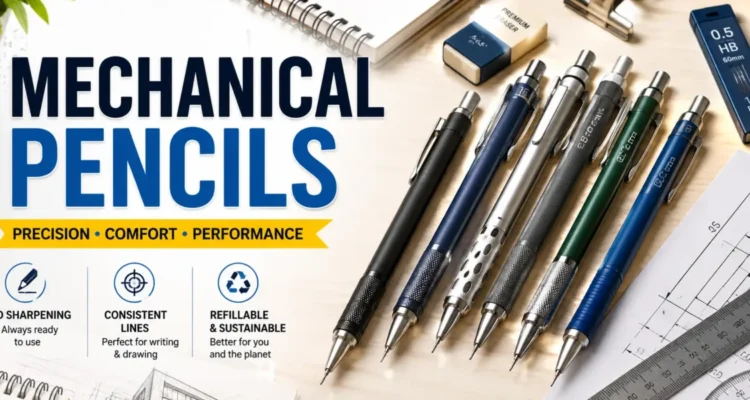
No Sharpening: Mechanical pencils eliminate the need for sharpening, saving time and effort while avoiding the mess associated with traditional sharpening methods.
Consistent Line Width: Unlike wooden pencils, mechanical pencils maintain a consistent line width throughout use, offering predictability in writing or drawing.
Consistent Balance: Mechanical pencils provide a balanced feel regardless of the lead length, enhancing the user experience, particularly for artists and professionals.
Refillable Design: Mechanical pencils are refillable, reducing waste and promoting sustainability by eliminating the need to discard pencil stubs.
Choice of Styles and Materials: Mechanical pencils come in a diverse range of styles and materials, allowing users to choose options that suit their preferences and needs, whether they prefer technical tools, luxury goods, or simple plastic-bodied designs.
Choosing the Right Mechanical Pencil:
When selecting a mechanical pencil, consider factors such as:
- Graphite hardness and lead size for specific writing or drawing requirements.
- Pen material, ranging from plastic to metal, based on durability preferences.
- Design aesthetics that reflect personal style and preferences.
- Price point relative to budget constraints, considering factors beyond just monetary value.
Shades of Mechanical Pencil:
Mechanical pencils come in a variety of shades and colors, offering users the opportunity to express their individuality and personal style. From classic black and silver designs to vibrant hues like red, blue, and green, the color options for mechanical pencils are virtually endless. Additionally, some mechanical pencils feature patterned or textured designs, adding further visual interest and tactile appeal. Whether you prefer a sleek and professional look or a bold and eye-catching design, there is a mechanical pencil shade to suit every preference and taste.
Mechanical Pencils vs Traditional Pencils
Both writing tools serve the same basic purpose, but they provide different user experiences. Traditional wooden pencils require regular sharpening and become shorter over time. In contrast, refillable models maintain a consistent writing feel and are always ready to use.
Students, engineers, architects, and artists often prefer these modern tools because they deliver greater precision, cleaner lines, and improved control.
Understanding different lead grades can also help users choose the right option for writing, sketching, or technical drawing. Learn more from Pencil Lead Grades Explained.
Common Lead Sizes
Different lead sizes are designed for different applications:
- 0.3 mm – Detailed technical work
- 0.5 mm – Everyday writing and note-taking
- 0.7 mm – General-purpose use
- 0.9 mm – Thicker and darker lines
- 2.0 mm – Sketching and creative artwork
Selecting the appropriate lead size can improve comfort, accuracy, and overall writing performance.
Best Uses
These versatile writing instruments are commonly used for:
- School assignments
- Note-taking
- Engineering drawings
- Architectural sketches
- Technical drafting
- Art and illustration
- Office tasks
Their precision makes them especially useful for projects that require consistency and fine detail.
FAQs
Are refillable pencils better than wooden pencils?
Both options have advantages. Many people prefer refillable models because they provide a consistent line width and eliminate the need for sharpening.
What is the best lead size for everyday use?
A 0.5 mm lead is the most popular choice because it offers a good balance between durability and precision.
Can artists use these writing tools?
Yes. Many artists use them for detailed sketches, outlines, and technical illustrations.
Do refillable pencils save money?
Because only the lead needs replacing, they can be more economical over time than repeatedly purchasing wooden pencils.
Are they environmentally friendly?
Since the body can be reused for years and only lead refills are needed, they typically generate less waste than disposable alternatives.
Conclusion:
In conclusion, mechanical pencils offer a modern and efficient alternative to traditional wooden pencils. Their unique features,
sustainability benefits, and customizable options make them a preferred choice for a wide range of users, from students to professionals. By understanding the various mechanisms and factors to consider when choosing a mechanical pencil, individuals can find the perfect tool to meet their writing and drawing needs. Overall, mechanical pencils combine practicality, sustainability, and design versatility in one convenient writing instrument, making them an essential tool for various applications.
Engineering Article
Engineers and designers often use precision tools alongside CNC Machining technologies for technical drafting and manufacturing.
