Understanding HVAC: 9 Powerful Systems for Indoor Comfort
 Kamran Liaquat Ali
- posted on
- No Comment

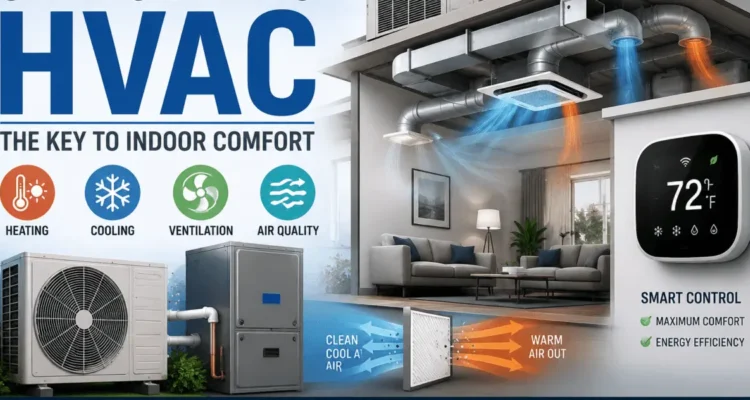
Understanding HVAC means learning how heating, ventilation, and air conditioning systems control temperature, humidity, airflow, pressure, filtration, and indoor air quality. A successful system does more than make a room feel warm or cool. It creates safe, stable, energy-efficient conditions for homes, offices, hospitals, factories, laboratories, data centers, and public buildings.
Table of Contents
This evergreen guide explains nine essential HVAC systems, major components, heat transfer, ventilation, controls, efficiency, maintenance, troubleshooting, and selection. For broader industrial context, visit our engineering and manufacturing guide, which connects HVAC with heat exchangers, power generation, CFD, automation, and facility engineering.
What Does HVAC Mean?
HVAC stands for heating, ventilation, and air conditioning. Heating raises indoor temperature during cold conditions. Ventilation supplies outdoor air, removes contaminants, and manages building pressure. Air conditioning normally cools and dehumidifies air, although modern systems may also heat, filter, humidify, and recover energy.
Understanding HVAC requires a systems view. Equipment, ductwork, piping, controls, insulation, electrical power, architecture, occupancy, climate, and maintenance all interact. A high-efficiency machine cannot deliver good performance if airflow is restricted, controls are incorrect, ducts leak, or the building envelope allows excessive heat gain.
How an HVAC System Works
Understanding HVAC begins with how an HVAC system senses indoor conditions, compares them with setpoints, and operates equipment to move heat and moisture. In cooling mode, a refrigeration system or chilled-water coil absorbs indoor heat and rejects it outdoors. In heating mode, a furnace, boiler, heat pump, electric heater, or recovered-energy source adds heat.
Fans move air through filters, coils, ducts, diffusers, and return grilles. Pumps circulate water or refrigerant where required. Dampers regulate outdoor, return, exhaust, and zone air. Sensors and controllers coordinate these components while safety devices protect people and equipment.
9 Essential HVAC Systems
1. Split Air-Conditioning Systems
A split system has an indoor unit and outdoor unit connected by refrigerant lines. The indoor coil and fan condition room air, while the outdoor compressor and coil reject or absorb heat. Ductless mini-splits serve individual zones; ducted splits use a central air handler and distribution network.
2. Packaged HVAC Units
A packaged unit combines major refrigeration and air-handling components in one cabinet, often on a roof or beside a building. Packaged equipment simplifies installation and preserves indoor space. Duct design, curb sealing, drainage, service access, vibration, and weather protection remain important.
3. Heat Pumps
A heat pump transfers heat rather than producing it only through combustion or resistance. A reversing valve allows many systems to cool in summer and heat in winter. Air-source, water-source, and ground-source configurations have different climate, cost, site, and maintenance requirements.
4. Furnaces and Boilers
Furnaces heat air directly and distribute it through ducts. Boilers heat water or produce steam for radiators, coils, radiant floors, or process loads. Combustion equipment needs correct fuel supply, venting, air, ignition, flame protection, heat-exchanger integrity, and carbon-monoxide safeguards.
5. Chilled-Water Systems
Large buildings often use chillers to cool water, pumps to circulate it, and air-handling or fan-coil units to cool zones. Heat is rejected through air-cooled condensers or cooling towers. Central plants can be efficient and flexible but require water treatment, controls, commissioning, and skilled maintenance.
6. Variable Refrigerant Flow Systems
Variable refrigerant flow systems connect multiple indoor units to an outdoor refrigerant network. Capacity changes with demand, and some arrangements can heat and cool different zones simultaneously. Refrigerant concentration, piping limits, controls, ventilation, and service expertise must be addressed.
7. Dedicated Outdoor-Air Systems
A dedicated outdoor-air system treats ventilation air separately from zone temperature control. It can filter, cool, heat, and dehumidify outdoor air before distribution. Separating latent and sensible loads can improve humidity control and help buildings meet ventilation requirements.
8. Exhaust and Make-Up Air Systems
Kitchens, laboratories, workshops, toilets, and industrial spaces exhaust contaminated air. Make-up air replaces that volume so the building does not develop excessive negative pressure. Poor balance can cause drafts, door problems, odor migration, combustion backdrafting, and uncontrolled infiltration.
9. Energy-Recovery Ventilation
Energy-recovery devices transfer heat, and sometimes moisture, between outgoing and incoming air streams. Wheels, plates, heat pipes, and runaround loops reduce ventilation loads. Cross-contamination, frost, leakage, bypass control, cleaning, and pressure drop must suit the application.
The Refrigeration Cycle Explained
Most mechanical cooling relies on four main components. The evaporator absorbs heat as refrigerant boils at low pressure. The compressor raises vapor pressure and temperature. The condenser rejects heat and turns vapor into liquid. The expansion device lowers pressure and meters refrigerant back to the evaporator.
Understanding HVAC refrigeration also means recognizing that cooling and dehumidification are linked. When coil temperature is below the air dew point, moisture condenses and must drain safely. Dirty coils, low airflow, incorrect charge, restricted piping, or failed controls can reduce capacity and damage equipment.
Heating Systems and Heat Transfer
Heating may use combustion, electric resistance, refrigeration, solar thermal energy, district heat, or recovered process heat. Conduction moves heat through solid walls, convection transfers it between surfaces and fluids, and radiation exchanges energy between surfaces across space.
Coils, boilers, condensers, evaporators, and water heaters are heat exchangers. Our guide to the shell and tube heat exchanger explains thermal duty, pressure drop, materials, fouling, inspection, and maintenance for industrial equipment.
Ventilation and Indoor Air Quality
Ventilation dilutes pollutants generated by people, materials, cleaning, cooking, combustion, and processes. Source control is normally more effective than dilution alone. Outdoor air also brings heat, moisture, particles, and pollution, so location, filtration, treatment, and control matter.
Carbon dioxide can help indicate occupancy and ventilation trends, but it is not a complete measure of indoor air quality. Humidity, particles, volatile compounds, odors, biological contaminants, and specific hazards may require separate assessment. The U.S. EPA indoor air quality resources explain common sources and control approaches.
Filters are selected by particle-removal efficiency, resistance, capacity, compatibility, and application. A more efficient filter may increase fan energy or reduce airflow if the system cannot handle its pressure drop. Correct installation and timely replacement prevent bypass and excessive loading.
Humidity and Moisture Control
High humidity can support mold, corrosion, condensation, odors, and discomfort. Very dry air may cause discomfort, static electricity, or process problems. Moisture enters through outdoor air, occupants, wet materials, infiltration, leaks, and industrial activities.
Cooling coils remove moisture only when sufficiently cold and operated with suitable airflow and run time. Dedicated dehumidification, reheat, desiccants, humidifiers, vapor control, and envelope repairs may be required. Drain pans and condensate lines must remain clean, trapped, sloped, and protected from overflow.
Air Distribution and Ductwork
Ducts deliver conditioned air and return it to the air handler. Size, shape, roughness, fittings, leakage, insulation, and layout determine pressure loss and noise. Flexible duct should be short, supported, and extended rather than crushed or sharply bent.
Diffusers should mix air without uncomfortable drafts or stagnant zones. Return-air paths must be adequate when doors close. Balancing adjusts dampers, fan settings, and terminals so measured airflow matches design intent. Understanding HVAC airflow is essential because many apparent equipment faults are actually distribution problems.
Controls, Thermostats, and Building Automation
A thermostat is one part of the control system. Larger facilities use sensors, controllers, actuators, variable-speed drives, schedules, alarms, and building automation. Controls coordinate temperature, humidity, pressure, ventilation, plant sequencing, and safety.
Control sequences should state when equipment starts, how capacity changes, what limits apply, and how faults are handled. Poor tuning causes hunting, simultaneous heating and cooling, unstable pressure, or wasted energy. Sensor location and calibration are as important as software logic.
Connected HVAC systems require cybersecurity, access management, backup, change control, and network coordination. Trend data helps diagnose problems only when points are accurate and timestamps, units, and operating context are understood.
Energy Efficiency and Operating Cost
Understanding HVAC energy use depends on climate, envelope, occupancy, ventilation, setpoints, equipment efficiency, schedules, controls, maintenance, and utility rates. Reducing loads often provides more value than replacing equipment alone. Insulation, shading, air sealing, efficient lighting, and controlled outdoor air can reduce required capacity.
- Use realistic schedules and temperature setpoints.
- Reset supply-air and water temperatures when conditions allow.
- Use variable speed for fans and pumps where appropriate.
- Keep coils, filters, heat exchangers, and cooling towers clean.
- Repair duct, valve, and damper leakage.
- Avoid simultaneous heating and cooling.
- Track normalized energy and investigate abnormal changes.
- Commission new systems and recommission existing systems.
HVAC Sizing and Load Calculations
Understanding HVAC sizing means equipment should be sized from heating and cooling loads rather than floor area alone. Loads include heat transfer through walls and roofs, solar gain, outdoor air, infiltration, occupants, lighting, appliances, and processes. Sensible load changes temperature; latent load changes moisture.
Oversized cooling equipment may cycle frequently, control humidity poorly, waste energy, and wear components. Undersized equipment may fail during design conditions. Zoning, diversity, future changes, redundancy, and part-load performance belong in the decision.
Maintenance Checklist
- Inspect and replace filters based on condition and requirements.
- Clean coils and verify unrestricted airflow.
- Check belts, bearings, fans, motors, and vibration.
- Clear condensate drains and inspect pans.
- Measure refrigerant and water-side performance correctly.
- Test safeties, alarms, dampers, valves, and actuators.
- Verify thermostat and sensor calibration.
- Inspect insulation, ducts, piping, and visible leakage.
- Review energy, temperature, humidity, and alarm trends.
- Maintain boilers, combustion, cooling towers, and water chemistry through qualified procedures.
Understanding HVAC maintenance frequency depends on equipment, environment, hours, criticality, and manufacturer guidance. Work on refrigerants, combustion, high voltage, pressure systems, or biological water hazards requires trained and authorized personnel.
Common HVAC Problems and Causes
Poor Cooling or Heating
Possible causes include dirty filters, blocked coils, low airflow, incorrect setpoints, failed valves, refrigerant faults, pump problems, duct leakage, control errors, or load beyond design. Diagnosis should begin with symptoms, operating mode, measurements, and equipment history.
Uneven Room Temperatures
Imbalance may result from duct design, closed dampers, inadequate return paths, envelope exposure, zoning, sensor location, or changed occupancy. Replacing the central unit rarely fixes a distribution problem.
High Humidity
Investigate excessive outdoor air, infiltration, short cycling, high coil temperature, low run time, drain problems, moisture sources, and control sequences. Humidity should be measured with a reliable instrument before conclusions are made.
Noise and Vibration
Noise may come from high air velocity, turbulence, loose panels, worn bearings, fan imbalance, compressor problems, pipe movement, or poor isolation. Correct the source instead of hiding serious mechanical symptoms.
Safety and Environmental Considerations
Understanding HVAC safety means hazards include electricity, rotating equipment, refrigerants, combustion gases, pressure, hot surfaces, chemicals, confined spaces, heights, and microbial growth in poorly managed water systems. Energy isolation, ventilation, leak detection, permits, training, and personal protective equipment must match the task.
Refrigerant choice affects safety, efficiency, climate impact, service availability, and regulation. Existing equipment should be maintained without intentional release, and replacements should be selected using current legal and technical requirements. Combustion systems require safe venting and carbon-monoxide protection.
How to Choose an HVAC System
- Calculate heating, cooling, humidity, and ventilation loads.
- Define indoor temperature and air-quality requirements.
- Evaluate climate, energy sources, tariffs, and resilience.
- Consider zoning, occupancy, schedules, and future changes.
- Confirm space for equipment, ducts, piping, drainage, and service.
- Compare part-load efficiency and total life-cycle cost.
- Plan controls, commissioning, maintenance, and replacement parts.
- Use qualified designers and applicable codes and standards.
For anyone understanding HVAC, the best choice is not always the system with the highest advertised efficiency. Actual performance depends on correct design, installation, controls, commissioning, operation, and maintenance. Understanding HVAC tradeoffs helps owners compare comfort, air quality, cost, reliability, and environmental impact together.
HVAC Design and Project Lifecycle
Understanding HVAC during planning begins with owner requirements, climate data, building use, occupancy, process loads, indoor criteria, utility availability, resilience, and budget. Designers translate these needs into load calculations, zoning, ventilation, equipment, distribution, controls, electrical demand, drainage, and service access.
Understanding HVAC during construction requires coordination among architecture, structure, electrical, plumbing, fire protection, and controls. Ducts and pipes need realistic routes; equipment needs access for filters, coils, motors, tubes, and replacement. Field changes should be reviewed because a convenient relocation can alter airflow, drainage, noise, pressure, or controls.
Understanding HVAC commissioning means verifying installation, start-up, air and water balancing, control sequences, safeties, alarms, trends, and documentation. Functional tests challenge equipment under different modes instead of checking only that it turns on. Operators also need training, setpoints, schedules, manuals, and current drawings.
Commercial and Industrial HVAC Requirements
Understanding HVAC for commercial buildings involves varying occupancy, perimeter solar loads, internal equipment, ventilation schedules, tenant zones, elevators, kitchens, and after-hours use. Controls must serve real operating patterns without conditioning empty areas unnecessarily.
Understanding HVAC for healthcare, laboratories, cleanrooms, and manufacturing adds pressure relationships, filtration, air-change rates, redundancy, contamination control, recovery after failure, and documented monitoring. Requirements should come from applicable regulations, standards, risk assessment, and process needs rather than generic office-building assumptions.
Understanding HVAC in data centers requires attention to equipment heat, airflow paths, humidity limits, redundancy, power quality, leak detection, and emergency response. Supply temperature alone does not prove effective cooling; rack inlet conditions and airflow recirculation matter.
HVAC Replacement and Retrofit Planning
Understanding HVAC replacement begins with diagnosis. High bills may result from envelope leakage, poor schedules, failed sensors, simultaneous heating and cooling, or dirty components rather than obsolete equipment alone. Measure loads and performance before selecting a new system.
Understanding HVAC retrofit constraints prevents surprises. Confirm electrical capacity, structural support, duct pressure, piping condition, drainage, ventilation, refrigerant routes, controls integration, noise, and service clearances. Temporary cooling or heating may be required for occupied or critical facilities.
Understanding HVAC life-cycle cost means comparing purchase, energy, water, maintenance, repairs, downtime, training, controls, parts, and eventual replacement. A maintainable system with reliable local support may outperform a theoretically efficient system that cannot be serviced correctly.
Practical HVAC Performance Checklist
- Understanding HVAC starts with verifying the operating mode and actual complaint.
- Understanding HVAC airflow requires measured supply, return, exhaust, and outdoor air.
- Understanding HVAC cooling requires temperatures, humidity, flow, and equipment status.
- Understanding HVAC heating requires safe fuel, electrical, water, or refrigerant operation.
- Understanding HVAC controls requires correct sensors, setpoints, schedules, and sequences.
- Understanding HVAC efficiency requires normalized energy and load information.
- Understanding HVAC maintenance requires records, trends, and condition-based priorities.
Frequently Asked Questions
What is the main purpose of HVAC?
Its purpose is to maintain acceptable indoor temperature, humidity, airflow, ventilation, pressure, and air quality for occupants, equipment, or processes.
Does HVAC always include air conditioning?
No. Some systems provide heating and ventilation without mechanical cooling. Requirements depend on climate, building use, loads, and applicable rules.
How often should filters be changed?
The interval depends on filter type, dust load, runtime, pressure drop, air-quality needs, and manufacturer guidance. Inspect regularly and replace before excessive resistance or bypass develops.
Why does an air conditioner remove water?
Moisture condenses when humid air contacts a cooling coil below its dew point. The condensate flows to a drain and must be managed safely.
What is HVAC commissioning?
Commissioning verifies that design, installation, controls, testing, documentation, and operation meet project requirements. It identifies problems before they become permanent energy or comfort issues.
Final Thoughts
Understanding HVAC is about connecting heat transfer, airflow, moisture, ventilation, controls, energy, safety, and maintenance. Comfort problems rarely belong to one component alone, so diagnosis and design should consider the complete building system.
Use measured loads, clear indoor requirements, maintainable equipment, and verified controls rather than relying on equipment labels alone. Return to our engineering and manufacturing guide for related explanations of heat exchangers, thermal power, CFD, automation, and industrial systems.
